


From Seyi Tayese, Yenagoa
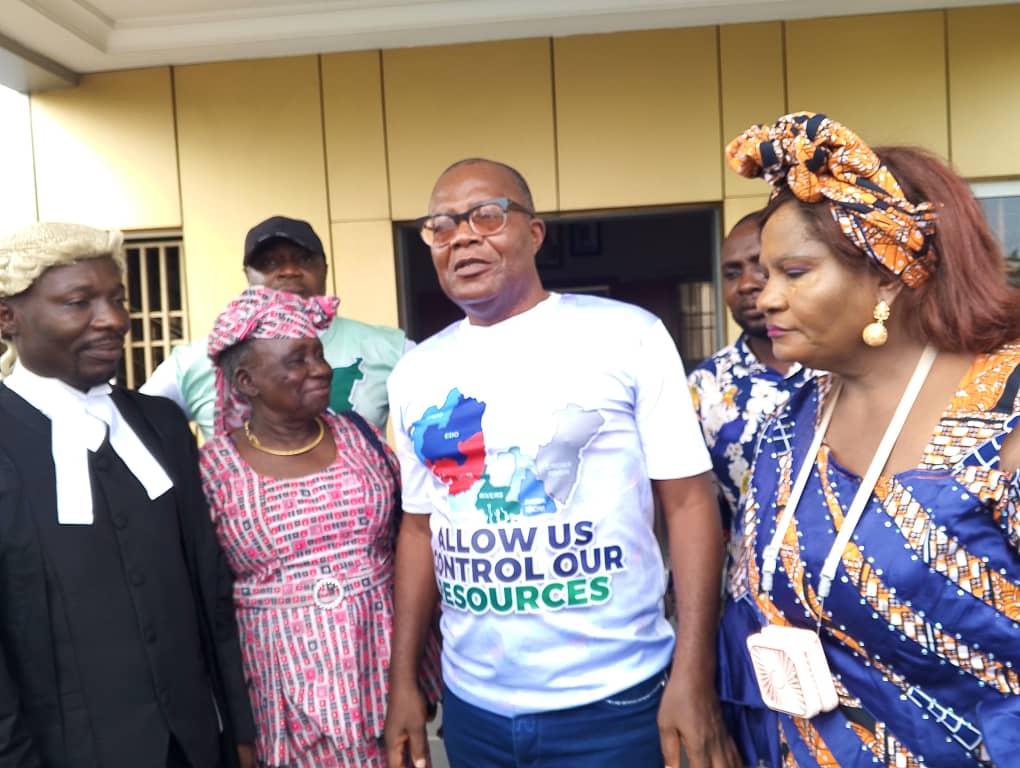
The Federal High Court sitting in Yenagoa, Bayelsa State, has adjourned two suits filed by the Supreme Egbesu Assembly (SEA) against the Federal Government and the National Assembly over resource control and the creation of additional local government areas in the state to November 12, 2026, for further hearing.

The suits, marked FHC/YNG/CS/63/2026, on resource control, and FHC/YNG/CS/64/2026, on the creation of additional local government areas, came up on Monday before Justice N. Ayo Emmanuel.
The adjournment followed the non-appearance of counsel for the National Assembly, prompting the judge to direct that efforts be made to ensure that the legislature’s legal representative appears at the next sitting.
The development has raised concerns among the applicants over what they describe as repeated delays in the determination of the cases.
Speaking after the proceedings, Secretary-General of the Supreme Egbesu Assembly, Dr Felix Tuodolo, accused the National Assembly and the Federal Government of employing delay tactics, alleging that the repeated absence of the legislature’s counsel was hindering the progress of the suits.
Tuodolo said the applicants had consistently attended court with their lawyers whenever the matters were scheduled, but had yet to see a legal representative appear for the National Assembly since the cases resumed.
He, however, disclosed that the Ministry of Justice appeared in court for the first time on Monday.
“We have been coming every time the case has been scheduled with our lawyers. They have not been coming. They have been using delay tactics,” he said.
Tuodolo expressed concern that the continued adjournments could prolong the resolution of the disputes while the Niger Delta continued to contribute substantially to the country’s resources without, in his view, receiving commensurate infrastructure and development.
He cited the Lagos-Calabar Coastal Highway project as an example of what he described as unequal infrastructure development, arguing that oil-producing communities in the Niger Delta deserved greater investment in road networks and other public infrastructure.
According to him, the region’s difficult terrain should not be used to justify inadequate infrastructure, particularly when the same environment is accessed for the exploitation of its natural resources.
“If it is difficult for you to build roads in that terrain, why is it not difficult for you to go to that very terrain to collect their resources? It is unfortunate. It is not acceptable to us,” he said.
The SEA secretary-general maintained that resource control would enable states and regions to determine their development priorities and utilise their natural endowments more effectively.
He called for a system under which each region would exploit its resources and contribute an agreed percentage to the Federal Government, allowing the federating units to develop according to their needs.
Tuodolo insisted that the applicants were seeking what they considered their legitimate rights and were more interested in securing a favourable judgment than receiving compensation.
“We want judgment. We want to win this case,” he said.
Earlier, counsel to the applicants, Barrister E. Kenneth Okorodas, said the resource control suit was founded on the 1999 Constitution of the Federal Republic of Nigeria, as amended.
He explained that the applicants were seeking a constitutional arrangement that would allow states to control their natural resources while remitting an agreed percentage to the Federal Government.
Okorodas said the parties had filed their respective briefs and that the applicants had also submitted their replies, adding that the matter could ordinarily have proceeded to the adoption of the briefs before the court reserved judgment.
He said, however, that the court considered it necessary, in the interest of justice, to give the National Assembly an opportunity to file its processes.
According to the lawyer, the legislature would be required to seek an extension of time if it intended to file its response outside the prescribed period, while the applicants would have the opportunity to challenge the reasons advanced for the delay.
Okorodas declined to speculate on whether the repeated absence of the National Assembly’s counsel was a deliberate attempt to frustrate the proceedings, saying the issue would be determined through the court process.
On the suit concerning additional local government areas, he disclosed that an amendment had been made to reflect a position providing for 33 local government areas, rather than the 24 cited in an earlier arrangement.
He said the amendment informed the request for adjournment in that matter.
The applicants in the suits include Tuodolo, Weri Digifa, Ebi Waribigha, Kabowei Akambe, Rosebella Jackson, Thomas Jacklloyd, Primrose Kpokposei, David Imole and Welma Warri.
The court is expected to take up the matters again on November 12, when the parties are expected to make further progress towards the determination of the disputes.
The outcome of the suits could have implications for the ongoing debate over resource ownership, fiscal federalism and the demand for additional local government areas in Bayelsa State.
