


…says ‘Michika needs mature leadership, not storytellers’
From Zubainatu Kambari, Yola
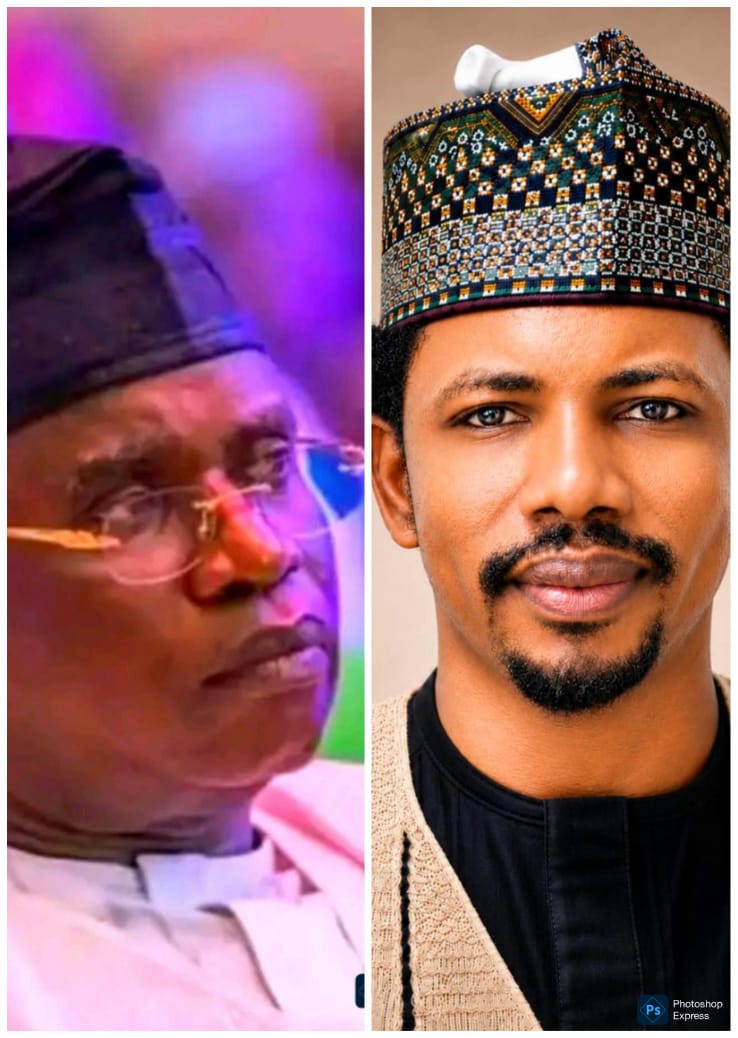
The Deputy Governorship Candidate of the All Progressives Congress (APC) in Adamawa State, Hon. Adamu Kamale, has launched a strong rebuttal against former Senator Ishaku Elisha Abbo, accusing the former lawmaker of engaging in self-promotion and political theatrics instead of focusing on tangible development for the people of Michika.
In a statement released on Wednesday and titled, “Putting the Records Straight, Sen. Abbo,” Kamale dismissed Abbo’s recent claims and defended his own record of public service, insisting that his contributions to Michika and Adamawa State are visible in the form of infrastructure projects, empowerment programmes, and development initiatives.
The exchange marks the latest chapter in an escalating war of words between the two prominent political figures, both of whom command significant followings in Michika Local Government Area and across Adamawa State.
Kamale said he was encouraged that Abbo openly acknowledged receiving about ₦220 million annually during his tenure in the Senate, but argued that the developmental impact of the former senator’s time in office did not match the resources and constitutional powers available to him.
According to Kamale, despite serving in the House of Representatives with comparatively fewer resources, he facilitated more projects and opportunities for his constituents than Abbo achieved during his five years in the Senate.
“I am glad you admitted that you received ₦220 million annually as a Senator for five years, and Michika benefited only three health centres throughout the entire period,” Kamale stated.
“Yet, with far greater constitutional powers than a House of Representatives member, your record still falls short of what I achieved with far fewer resources when I served in the 8th Assembly. I performed ten times more in four years than what you achieved with the exalted Senate position in five years.”
The APC deputy governorship candidate said residents of Michika are familiar with the projects he facilitated while in office, including bridges, schools, water schemes, healthcare facilities, empowerment programmes, and employment opportunities.
He maintained that those achievements remain verifiable and continue to benefit communities across the area.
“The people of Michika can see the bridges, schools, water projects, health facilities, empowerment programmes and federal opportunities I facilitated. Those are facts, not campaign poetry,” he said.
Kamale also took aim at what he described as a recurring pattern in Abbo’s political engagements, accusing the former senator of portraying himself as a perpetual victim whenever elections approach.
According to him, effective leadership should be judged by development outcomes and not by claims of political persecution.
“It is disheartening that in every election season, you return with the same script: ‘I fought everyone, everyone betrayed me, everyone wanted to kill me.’ Leadership is not measured by how many enemies you claim to have but by the lasting development you leave behind,” he stated.
The APC chieftain further cautioned against what he described as the politicization of the suffering endured by Michika residents during the Boko Haram insurgency, noting that many individuals contributed to the recovery and rebuilding of affected communities without seeking public acclaim.
“Thousands suffered during the insurgency, and many leaders worked quietly without turning every sacrifice into a personal publicity campaign,” he said.
Drawing a sharp contrast between his political style and that of the former senator, Kamale declared that his strength lies in building productive relationships capable of attracting development to the people, while accusing Abbo of generating controversy for political attention.
“As for me, my record speaks louder than your rhetoric. I built relationships that bring development. You build controversies that bring headlines,” he said.
He argued that the future of Michika depends on leadership capable of fostering unity, attracting investments, and delivering measurable results rather than engaging in political drama.
“Michika does not need a puerile and recalcitrant storyteller. Michika needs mature leadership that can bring development, results and unity. My people already know the difference,” he added.
Kamale also highlighted his working relationship with Governor Ahmadu Umaru Fintiri, saying it has played a significant role in attracting development projects to Michika and other parts of Adamawa State.
According to him, several infrastructure projects executed by the Fintiri administration, including roads, healthcare facilities, schools, markets, and water projects, are evidence of what can be achieved through constructive collaboration and strategic partnerships.
“I am proud to put it to you that my relationships, especially with Governor Ahmadu Umaru Fintiri, orchestrated and brought unprecedented development not only to Michika but across the state,” Kamale said.
He challenged Abbo to tour communities across Michika and other local government areas to witness the projects delivered under the current administration, contrasting them with what he described as years of unmet expectations during the former senator’s tenure.
Kamale also took exception to remarks he said suggested that no other Michika indigene was qualified to occupy positions of responsibility while Abbo remained active in politics.
He described such a position as insulting to the people of the area and called on the former senator to retract the statement and apologize.
“Michika is endowed with great minds and capabilities, and for you to suggest that the people are not capable of holding positions in your presence is not only an insult but also deserves an immediate retraction and an unreserved apology,” he stated.
The latest exchange underscores growing political tensions ahead of future electoral contests in Adamawa State, with both camps seeking to shape public perception through competing narratives of performance, leadership, and political relevance.
As the debate continues, observers say the people of Michika will ultimately judge their leaders not by rhetoric but by the tangible impact of their service and the legacy they leave behind.
