


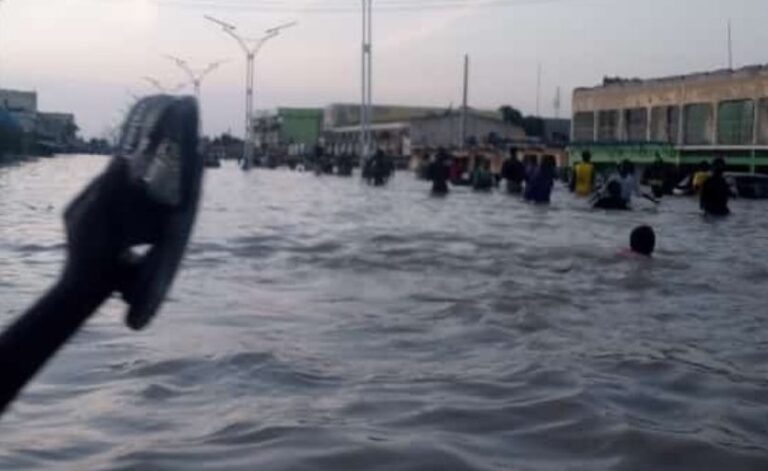
Save the Children International (SCI) Nigeria says over 150,000 children displaced by flooding in Borno State urgently require humanitarian assistance.
SCI Country Director, Duncan Harvey, disclosed this on Wednesday in Abuja at a news conference on his visit to Maiduguri to evaluate the situation and provide assistance to those affected.

Harvey said over 300,000 people had been registered in at least 26 relocation sites as of September 14.
He added that about 30 sites had been set up, while registration was ongoing.
He said, “So we can estimate that around 150,000 of the people living in those camps are children, and therefore that’s a very real cause of concern. We need to protect those children, provide them with health and nutrition, make sure they have access to clean water, and also ensure that they have appropriate care in place.”
Harvey said more than 400,000 persons were affected by the floods in Borno, which left 37 dead and 58 people injured.
He said Internally Displaced Persons (IDP) camps were overcrowded and unsanitary, noting that the scale of partners’ services was not keeping up with the numbers.
The SCI country director said that the flooding happened at the height of a food and nutrition crises, lamenting that “in addition to the immediate need for food and clean water for IDPs, water- borne diseases and malaria are major risks. Open defecation in the camps is widespread.”
Harvey appealed to the Borno State and the Federal Governments to ensure that humanitarian actors are supported and encouraged with enabling approaches and systems that help to speed up response programme for children, families and communities in urgent need.
He said SCI had been providing urgent rescue service, life-saving response and rehabilitation for the affected communities in the state.
“SCI’s urgent response plan to the crises includes but not limited to Multi-Purpose Cash Assistance (MPCA) to the affected households, setting up health and nutrition outreach services to the affected households, rehabilitation of sanitation facilities, and conducting hygiene promotion and community awareness, child protection in emergencies through setting up mental health and psychosocial support (MHPSS) help desk to provide psychological first aid and psychological support to children and caregivers in the camp among others,” Harvey said.
He assured that SCI had also been working in collaboration with the state government and other humanitarian actors.
