


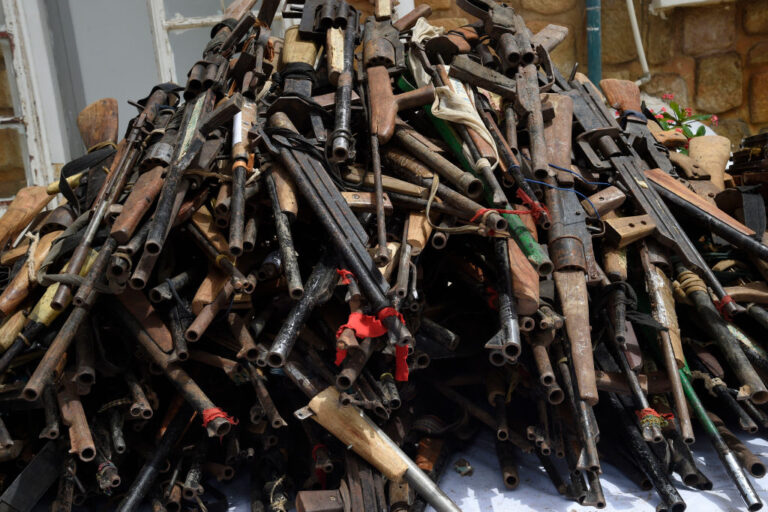
Nigeria’s importation of arms and ammunition rose by 104.31 per cent in the first half of 2026, climbing to N55.06bn from N26.95bn recorded in the corresponding period of 2025, as concerns mount over weapons proliferation ahead of next year’s general elections.
Latest data on foreign trade accessed from the National Bureau of Statistics for the second quarter of 2026 revealed that the country imported over N55bn worth of arms in six months.

The PUNCH reports that the inflow of arms came barely a year before the Independent National Electoral Commission conducts the 2027 general elections. INEC has scheduled the Presidential and National Assembly polls for January 16, 2027, and the Governorship and State Houses of Assembly elections for February 6, 2027.
Notably, the arms import surge follows an earlier report by The PUNCH that the Nigeria Customs Service intercepted about 603 firearms entering the country between January and August 2026. The seized weapons have reportedly been handed over to the National Centre for the Control of Small Arms and Light Weapons.
Security analysts and civil society groups have repeatedly linked the availability of arms to the credibility and safety of Nigerian elections. A recent assessment by the CLEEN Foundation of security conduct during the 2026 Osun State governorship election offers a picture of what is at stake ahead of 2027.
The Foundation, which deployed trained observers to monitor the conduct of security officials at the close of polls in Osun, found that security presence was sustained in the “large majority” of polling units it monitored, with all reports rating the number of officers present as adequate.
However, officers were reported to have left their duty posts for some period in six per cent of cases, while two per cent of polling stations were left entirely unattended by security personnel.
The Foundation described continuity of security presence through to the close of polls as critical, noting that “opportunistic interference is most likely” in the final hours of voting and the period immediately after, when queues are cleared, and ballot boxes are prepared for movement.
Its report further disclosed that officers were seen visibly armed with firearms in 37 per cent of the locations monitored, a figure it described as broadly consistent with standard deployment protocol.
Security officials were also reported to have used force in two per cent of locations, while threat incidents were recorded in 12 per cent of monitored polling units.
Assessing the security of ballot boxes after voting, a critical link in Nigeria’s electoral chain of custody, the Foundation said officials provided security cover for transporting ballot boxes in 86 per cent of the polling units it monitored. In comparison, the remaining 14 per cent could not be independently confirmed.
The Foundation’s separate review of election-day media reports identified six locations with alleged violence, including gunfire near a traditional ruler’s palace and thug-related disruption at a polling unit, though it stressed that most of these accounts originated from unconfirmed party allegations rather than verified incidents.
In its recommendations, the CLEEN Foundation urged security agencies to “sustain, rather than relax, officer presence and vigilance” through the collation and transmission of election results, warning that risks to voters, party agents and observers historically rise in the period after voting closes.
The Foundation also called on the Federal Government to fast-track legislation establishing a dedicated judicial process for prosecuting electoral offenders, describing the current enforcement gap as fuelling a “climate of impunity” that weakens deterrence against electoral malpractice.
(Punch)
