


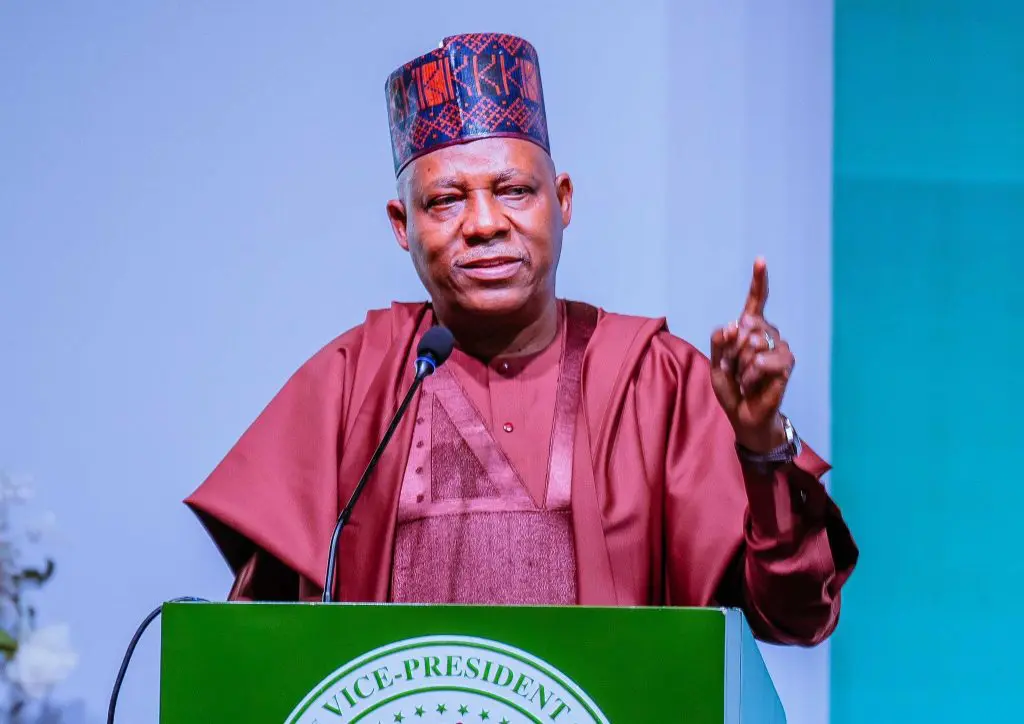
Vice-President Kashim Shettima has called on West African leaders to collectively confront the wave of xenophobic attacks in South Africa.
He reminded Pretoria that countries such as Nigeria made enormous sacrifices to support the anti-apartheid struggle, including deductions from students’ scholarship allowances to finance liberation movements.

Shettima, who was addressing the 69th Ordinary Session of the ECOWAS Authority of Heads of State and Government in Sierra Leone, called for the issue to be placed on the agenda of the next African Union summit.
The Nigerian vice president said a united regional position was necessary to halt growing intolerance against fellow Africans.
According to him, ECOWAS must speak with one voice to demonstrate that violence and discrimination against African migrants have no place on the continent.
He said, “While we tread the path of moderation, South Africa should be reminded that the freedom the country currently enjoys is due to the liberation efforts of African countries such as Nigeria and Ghana.
“Deductions were made from our scholarship allowances to fund liberation movements in Southern Africa.
“They should learn to know where their problem lies. Their problems do not lie with fellow Africans who are there to sell their skills.”
Shettima’s remarks came amid heightened diplomatic tensions between Nigeria and South Africa following renewed attacks on African migrants that have claimed the lives of several Nigerians in recent months.
Nigeria has repeatedly condemned the killings and demanded justice for its citizens, while warning that stronger measures remain an option if the attacks persist.
Shettima maintained that the challenge facing South Africa should not be blamed on migrants who contribute their expertise to the country’s economy.
His appeal also sought broader continental action, insisting that the African Union should take a firm position against xenophobia to protect the rights and safety of Africans living across the continent.
The latest intervention reinforces Nigeria’s increasingly vocal criticism of South Africa since anti-migrant violence escalated in April.
Foreign Affairs Minister, Bianca Odumegwu Ojukwu, had earlier recalled Nigeria’s leading role in the anti-apartheid struggle, saying the country committed substantial financial and material resources to South Africa’s liberation.
“Nigeria sacrificed quite a lot, committed funds, committed resources to aid South Africa. In schools, seats were reserved for South African students.
“My own generation carried placards; we demonstrated in front of South African assets. Sometimes we even got arrested for doing this”, she said.
The minister added that Nigerians were deeply dissatisfied with the treatment being meted out to black African migrants.
“They are not asking other migrants to leave; they’re only asking black migrants to leave,” she said.
The renewed diplomatic pressure follows a fresh wave of anti-migrant protests that have left at least four Nigerians dead.
In response, the Federal Government evacuated 1,490 Nigerians from South Africa in seven batches after rights groups issued an unofficial June 30 deadline directing migrants to leave the country.
Although Abuja has maintained diplomatic engagement with Pretoria, it has also warned that retaliatory measures remain under consideration if attacks on Nigerians continue.
