


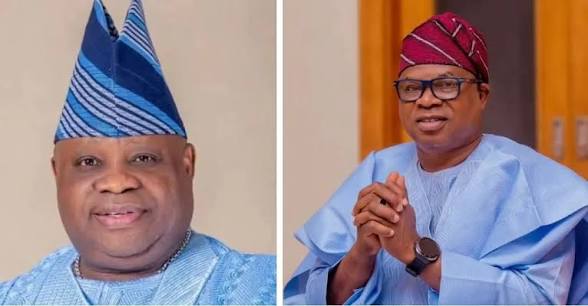
By Aremu Kolade-Aina
In the unfolding political story of Osun State, a familiar rhythm is returning ahead of the August 15, 2026 governorship election. It is the rhythm of competition, calculation, and cautious optimism. At the center of this emerging narrative is Bola Oyebamiji, a man whose long years in finance, governance, and institutional leadership are beginning to shape conversations about the state’s future.
Popularly known among associates as a quiet achiever rather than a loud political showman, Oyebamiji’s journey into the public arena reflects a blend of technocratic discipline and grassroots connection. His early exposure to the financial sector, with stints at banks such as Wema Bank and Enterprise Bank, laid a foundation that would later define his approach to governance—structured, data-driven, and focused on sustainability.
His transition into public service under the administration of Rauf Aregbesola marked a turning point. As Managing Director of the Osun State Investment Company (now Omoluabi Holdings), Oyebamiji was tasked with reviving and repositioning a critical state asset. By most accounts, he approached the role with a reformist mindset—prioritizing efficiency, investment growth, and institutional stability. That performance would eventually earn him a place in the cabinet as Commissioner for Finance, one of the most demanding portfolios in any state government.
Between 2017 and 2022, Oyebamiji’s stewardship of Osun’s finances coincided with a period of fiscal pressure across many Nigerian states. Yet, he built a reputation for prudence and accountability, receiving recognition from institutions including the World Bank for efforts in public expenditure efficiency and domestic revenue mobilization. For supporters, this record is not just a line on a résumé—it is evidence of readiness.
Still, elections are rarely won on credentials alone. Oyebamiji’s growing appeal lies in the intersection of competence and community. From Ikire, his hometown, to broader constituencies across the state, he has maintained a steady presence in local development efforts—supporting social initiatives, engaging professional networks, and building relationships that extend beyond political cycles. This grassroots footprint could prove decisive in a state where voter sentiment often swings on accessibility and trust.
The 2026 race, however, is far from a straightforward contest. Incumbent governor Ademola Adeleke has since shifted political alignment to the Accord Party, a move that significantly reshapes the dynamics of the race. While he retains strong populist appeal and the advantages of incumbency, the change introduces new variables into an already competitive environment—particularly in terms of party structure, voter loyalty, and coalition strength.
Within the opposition All Progressives Congress, there is a growing sense that the party’s pathway back to power may depend on presenting a candidate with both administrative depth and electoral relatability.
Oyebamiji appears to fit that profile. His experience spans banking, public finance, risk management, and institutional governance—fields that speak directly to the economic aspirations of a state seeking growth and stability. At a time when voters are increasingly attentive to issues such as fiscal discipline, infrastructure development, and job creation, his background offers a compelling narrative of capability.
Moreover, his exposure to global best practices—through international conferences, policy workshops, and executive training—positions him as a bridge between local realities and global standards. In a state proudly known as the “State of the Living Spring,” where heritage meets ambition, such a perspective may resonate with a new generation of voters.
As the election approaches, one thing is becoming increasingly clear: Bola Oyebamiji is no longer just a seasoned technocrat waiting in the wings, but a serious contender whose profile aligns closely with the evolving expectations of voters in Osun State. In contrast to an incumbent, Ademola Adeleke, widely known for his flair for public entertainment and crowd engagement, Oyebamiji is positioning himself as a candidate defined by discipline, depth, and a laser focus on the real issues that shape development—fiscal stability, infrastructure, job creation, and institutional efficiency. That contrast, increasingly, may work in his favour. For a state seeking not just energy but enduring progress, Oyebamiji’s steady, issues-driven approach could resonate with voters looking beyond spectacle toward substance—making his path to victory not just plausible, but progressively more compelling.
Dr. Aremu Kolade-Aina is an Ibadan-based political affairs commentator.
