


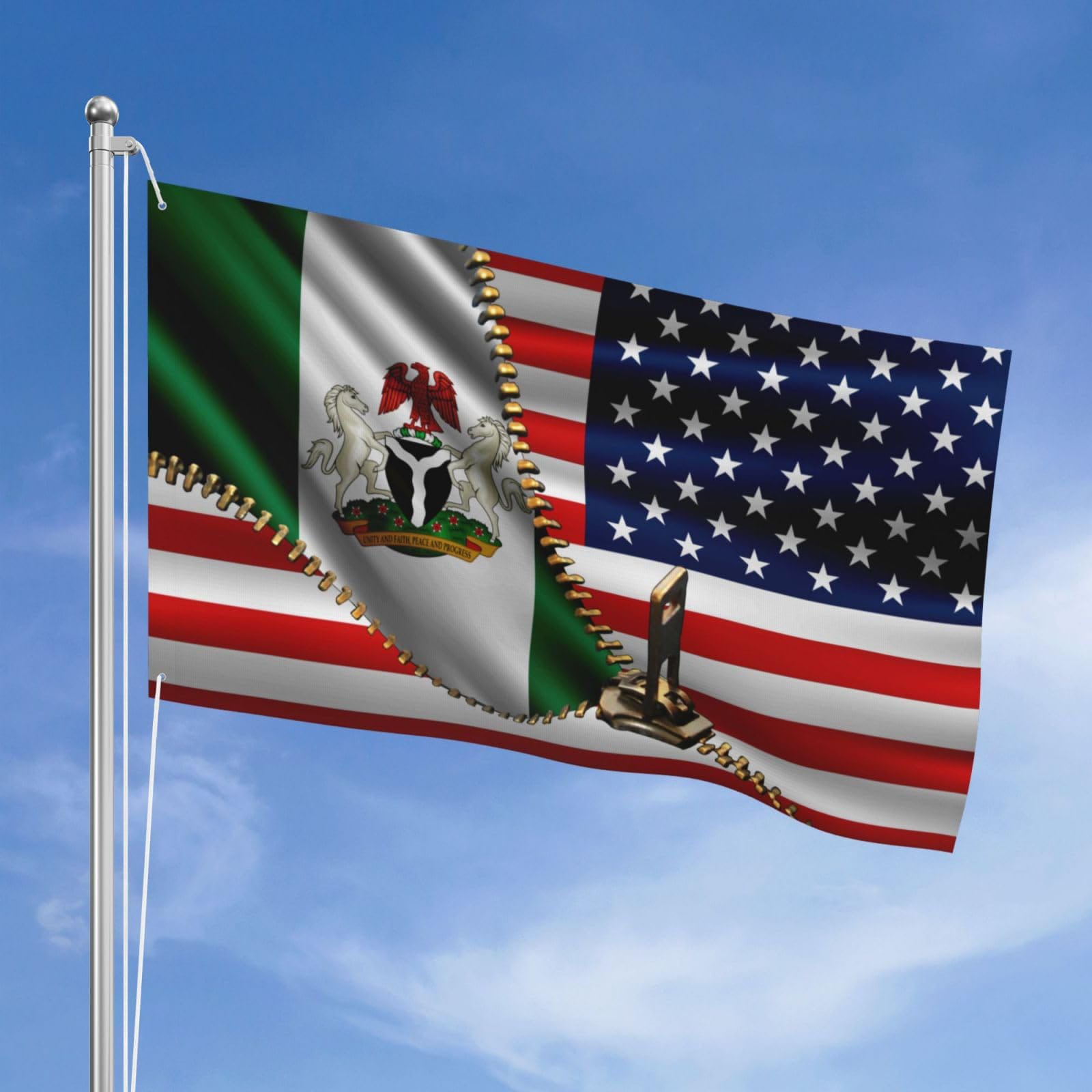
“It’s not the voting that’s Democracy; it’s the counting”- Tom Stoppard
By Dr. George Elijah Otumu

Without a shred of a doubt, the United States (U.S) runs the world’s oldest continuous constitutional democracy, being a city set on the Hill. America is the place where citizens enjoy strong constitutional rights, robust freedom of expression, and religious liberty. The nation in 250 years acts as a major economic and military power that often inspires movements for freedom abroad. Nevertheless, International indices, such as ‘The Economist’s Democracy Index’, often classify the U.S. as a “flawed democracy” rather than a top-tier performer, lagging behind several European and Nordic nations in areas like voter participation fairness and economic equality. This is why persistent systemic issues like economic inequality, racial disparities, and high polarization weaken the everyday function of the system for many citizens. Organizations like Freedom House put it perfectly that U.S. institutions have faced serious erosion from political polarization, extremism, and partisan pressure. Even as the 2027 electioneering is on course in Africa’s most populous black nation, the last guardrail to checkmate fraud in Nigeria’s voting process is the independent press where the mantra is integrity and honesty. Integrity cannot be sold; honesty cannot be bought. What makes a genuine person of unquestionable personality are your honesty and integrity being your true character.
Africa’s democratic Icon, Nelson Mandela, former president of the Republic of South Africa once said among other things: “If the United States of America or Britain is having elections, they don’t ask for observers from Africa or Asia. But when we have elections, they want observers”. There had been no elections held in the 54 nations of the African continent that had no foreign observers on ground, yet, at the end, the outcome most of the times skewed or led into bedlam of noise, controversy, violence; lawlessness and unending court litigations. Where have we all got it wrong? Don’t we have the true mechanism to guarantee and effect a free and fair election in Africa on our own?
To enjoy a free and fair election, every aspiring public office holder should not think as politicians but as the statesman who rises above primordial sentiments, biases, to embrace the bigger picture of the unification of Nigeria for our collective national interest, since we are all Nigerians by birth. This postulation was the stance taken by James Freeman Clarke, when he said: “A politician thinks of the next election. A statesman, of the next generation.”
For instance, if not for the consistency and persistence of the U.S press through thick and thin, we may no longer be referring to Uncle Sam’s country as a living example of Democracy. American media safeguards Democracy by acting as an independent watchdog that holds leaders accountable, investigates corruption, and provides citizens with the factual information needed to make choices.
Journalists use free inquiry to uncover abuse of power, government secrecy, and official wrongdoing. Newsrooms counter misinformation and conspiracy theories by verifying truth and correcting the public record. Outlets offer a space for public debate and open communication between voters and elected officials. Modern newsrooms run specialized “democracy beats” focused on voter access, election laws, and ballot security. Media is protected by the First Amendment, the independent press functions as an unwritten fourth branch of checks and balances.
This is the main reason why presidential candidates and political parties in Nigeria’s 2027 election should, as a matter of urgency, not delay in continuing reaching out to contract highly respected, profoundly experienced investigative journalists with unblemish reputation, international networking and press clout who could navigate the landmines of media backlash; electoral distrust to bring to the doorsteps of the masses a comprehensive impact of the presidential candidate’s manifest so the voters could make an informed, timely decision since every journalist possesses his/her ByLine, being the reporters’ greatest asset
America’s current problems are polarization and targeted rhetoric which has reduced public belief in verified facts, shrinking local news and corporate media buyouts threatening independent reporting and continuing debates over whether journalists should remain strictly neutral or actively defend democratic norms.
But what role should the media play in Democracy? And why does it matter for the electorates? Top scholars in the United Kingdom, Caitlin Farrell and Lisa James correctly put it this way, “The media plays a vital role in democracies, as an arena for debate and a source of accountability.”
In a Democracy, the media educates, informs and entertains – including through news, opinion, analysis, satire and drama. It is a key route through which the public hears about politics, and it plays an important role in shaping the public agenda and forming public opinion.
However, in recent years frequent concerns have been expressed about the health of the news media. Attacks on media independence or broadcaster impartiality have raised alarm. Media market changes have led to cuts in local and investigative journalism and have amplified polarising rhetoric and misinformation. Monopoly ownership may yield an undue concentration of power.
It is certain that the media is central to Democratic participation. It creates an arena for the exchange of opinion, discussion and deliberation – a space sometimes referred to as the ‘public sphere’. It provides a channel of communication between politicians and the public, allowing politicians to communicate their beliefs and proposals, giving the public the information that they need in order to participate, and allowing the voices of the public to be heard by politicians. The media also assists in holding politicians to account – through reporting, and direct scrutiny such as interviews.
The media has an important role in the formation of public opinion. Via the content and tone of its coverage, it can influence how members of the public understand an issue, which topics they consider important, and what information they use in forming overall political judgments.
It is in the news that these central media roles of influencing public opinion and aiding political accountability mean that politicians engaged in ‘democratic backsliding’ around the world often threaten media independence. This can take many forms, from overt censorship, persecution via the law and violence against journalists, to funding cuts and the takeover of supposedly independent media outlets or regulators.
A free and healthy media requires several features, including media independence, pluralism, the existence of impartial outlets, and high journalistic standards.
The media are essential to democracy, and a democratic election is impossible without the media. A free and fair election is not only about the freedom to vote and the knowledge of how to cast a vote, but also about a participatory process where voters engage in public debate and have adequate information about parties, policies, candidates and the election process itself in order to make informed choices. Furthermore, the media acts as a crucial watchdog to democratic elections, safeguarding the transparency of the process. Indeed, a democratic election with no media freedom, or stifled media freedom, would be a contradiction.
In order to fulfill their roles, the media need to maintain a high level of professionalism, accuracy and impartiality in their coverage. Regulatory frameworks can help ensure high standards. Laws and regulation should guarantee fundamental freedoms essential to democracy, including freedom of information and expression, as well as participation. Meanwhile, provisions such as requiring government media, funded out of public money, to give fair coverage and equitable access to opposition parties, help ensure appropriate media behavior during elections.
The media have traditionally been understood to refer to the printed press as well as radio and television broadcasters. In recent years however, the definition has become broader, encompassing new media including online journalism, and social media. Citizen journalism is widely gaining traction, including in countries where traditional media is either controlled or strictly regulated.
The questions on the minds of many are: what are the exact roles of the press in a free, fair election? This was answered by Amphina Academy, a Nigerian registered educational consult in one of their research projects. The study confirms that “election is a festival of Democracy: it fosters an inclusive state, Democracy rooted in popular Sovereignty, sustainable peace and tests competitive strength of political parties, and leaders through various programmes of ideologies”.
It is in this context that some school of thoughts share in the belief that there are five cardinal conditions to witness a free and fair election, in the following sequence:
Political parties should perform their campaigns in a well-mannered process; no political leader should use indecent language for others, media should not support any political parties; the press should show the reality and the actual knowledge about the political leaders or political parties; leaders who try to violate rules or leaders who try to cause violence and people being used by them to cause breakdown of law and order should not participate in the elections and during the voting time, police, members of election committee should check properly that there are no cast bogus votes.
For the United Nations Educational, Scientific and Cultural Organization (UNESCO), it emphasised the urgency of properly following through the election rules.
UNESCO believes in protecting freedom of expression and access to information being essential for Democracy: when information is accurate, extensive and available, elections remain free and fair, and Democracy thrives. However, the Internet, social media and Artificial Intelligence (AI) pose challenges to the electoral processes and the implementation of fundamental human rights and internationally accepted standards and norms. Media, political parties and electoral regulators have a role to play in this regard.
UNESCO contributes to guaranteeing free, plural and fair elections in times of disinformation. UNESCO supports the full, fair and efficient disclosure of information to journalists covering elections as well as the training of security forces and journalists on countering disinformation and maintaining public order in times of elections while upholding the right to freedom of expression.
This is why in building past initiatives and working within the UN family of the Inter-agency Coordination Mechanisms in Electoral Assistance (ICMEA), UNESCO aims to upscale its global reach on media and elections. In the framework of UNESCO’s coordination of the UN Plan of Action on the Safety of Journalists, UNESCO has developed a comprehensive programme that aims to guarantee free, plural, and fair elections in times of disinformation through fostering freedom of expression, including press freedom and public access to information.
The main objective of this UNESCO initiative is to reinforce the capacities and knowledge of key actors involved in elections on international standards and best practices on these issues. It specifically seeks to address the challenges of disinformation during the different electoral phases.
Can we then ask ourselves, what are the threats to the 2027 election in Nigeria?
As Nigeria transitions into full election mode for the 2027 general elections, the political temperature is heating up at a scale that puts the country’s democracy under intense pressure.
Democratic institutions are struggling to respond to pressures emanating from the actions of political actors. The political landscape has been marked by heightened elite bargaining, strategic political realignments, and back-to-back campaigns. These developments reflect a troubling pathology of Nigeria’s electoral politics, which relegates governance for the advancement of electoral ambition.
Consistent with historical precedent in previous election seasons, political actors are spending less time on governance and paying more attention to getting elected. Policy actions and government programs are structured to advance political aspirations ahead of the elections.
*Possible elimination of electoral competition:
The legitimacy of elections is derived from competition and contestation. Where competition is eliminated, elections lose their democratic ingredient. One of the most profound threats to the 2027 elections is the systematic erosion of political competition through induced defections from political parties and the incremental decimation of opposition parties. This distortion of the political landscape could disincentivize public participation in the 2027 elections, as voters will have limited political choices. Constricting the political space and the gradual descent towards a one-party state threaten Nigeria’s democratic trajectory ahead of the 2027 elections. When political pluralism is overtly or covertly removed from electoral politics, authoritarianism creeps in, and it diminishes the legitimacy of electoral outcomes.
*Deepening electoral cynicism:
While Nigerians are interested in voting in 2027, a substantial number of Nigerians believe their vote makes no difference and that electoral outcomes are predetermined. This is largely driven by what I regard as a triangle of compromise involving three major institutions: security agencies, INEC, and the judiciary. This crisis of confidence is not unfounded. Instances of conflicting results from the same polling units, bypass of the Bimodal Voter Authentication System (BVAS), and tampering with election results drive distrust in election outcomes. Political elites continue to affirm the narrative that voters don’t matter with the way the defections to the ruling party have been framed.
*Insecurity and escalating tensions:
The current multi-dimensional security crisis poses a serious threat to the 2027 elections. As the National Voting Intentions Round Survey recently shows, insecurity may drive low voter turnout in 2027 despite high voting interest. Insurgency, banditry, communal conflicts, separatist agitations, and organized criminal violence continue to overstretch Nigeria’s security architecture. This expanded geography of insecurity undermines the likelihood of a safe and peaceful environment for elections. The Independent National Electoral Commission (INEC) may be constrained to organize elections in volatile and ungoverned spaces, while voters in conflict zones may be disenfranchised. Where insecurity impedes the deployment of election personnel, materials, and security assets, the credibility and inclusiveness of the electoral process are fundamentally compromised.
Whether Nigeria slides into full-blown electoral authoritarianism or advances toward democratic legitimacy depends on the constellation of interdependent forces as addressed by the Chairman of INEC, Prof. Joash Amupitan, SAN, who has outlined five non-negotiable pillars to guide the Commission’s work: institutional independence and freedom from interference; fairness and equal treatment of all political parties and candidates; credibility in the eyes of Nigerians and the international community; transparency across every stage of the electoral process; and inclusivity to ensure that no eligible voter is disenfranchised. If implemented, he assured the electorates that these standards will radically transform the electoral process, restore public confidence, and place Nigeria back on the path of democratic progress.
For the purpose of this article, let’s narrow this discussion to three front-runner political parties: All Progressives Congress (APC), African Democratic Congress (ADC), and Nigeria Democratic Congress (NDC), whose flag bearers are: Senator Bola Ahmed Tinubu, Alhaji Atiku Abubakar and Peter Obi.
Each one of these presidential candidates is seen through the lens of metaphor by the voters as a ‘BRIDE’. We all know that when a spouse courts a bride, you expect the bride to be honest, truthful, possessing good character that one can vouch for and be willing to positively impact the union by the partner’s positive contribution.
Above, the electorates are playing the role of the spouse in courtship by following the manifestoes (visions, characters, honesty and evaluating the transformative agendas) of the presidential candidates for better lives to the voters.
This is the main reason why presidential candidates and political parties in Nigeria’s 2027 election should, as a matter of urgency, not delay in continuing reaching out to contract highly respected, profoundly experienced investigative journalists with unblemish reputation, international networking and press clout who could navigate the landmines of media backlash; electoral distrust to bring to the doorsteps of the masses a comprehensive impact of the presidential candidate’s manifest so the voters could make an informed, timely decision since every journalist possesses his/her ByLine, being the reporters’ greatest asset.
Without letting the cat out of the bag, who among the bride do you think the electorates are in complete tune, admiration of their manifestoes in the 2027 presidential election to earn their votes and becoming the next elected winner, and occupant of Aso Rock at the end of the electioneering period?
. OTUMU is the Executive Editor & Group Managing Director, NAIJA STANDARD NEWSPAPER Inc, a premier, most read Africa’s online news medium in North America and can be reached directly at: naija222@gmail.com or on our America’s Editorial Board 24/7 Customer Support Service direct roaming mobile WhatsApp number at: +1682.551.5373
