


Segun Ayinde, Abeokuta
Director General of the National Health Insurance Authority (NHIA), Dr. Kelechi Ohiri, on Friday, said about 20 million Nigerians representing 10 per cent of the 200million populace have enrolled in the Federal and state health insurance schemes across the country.
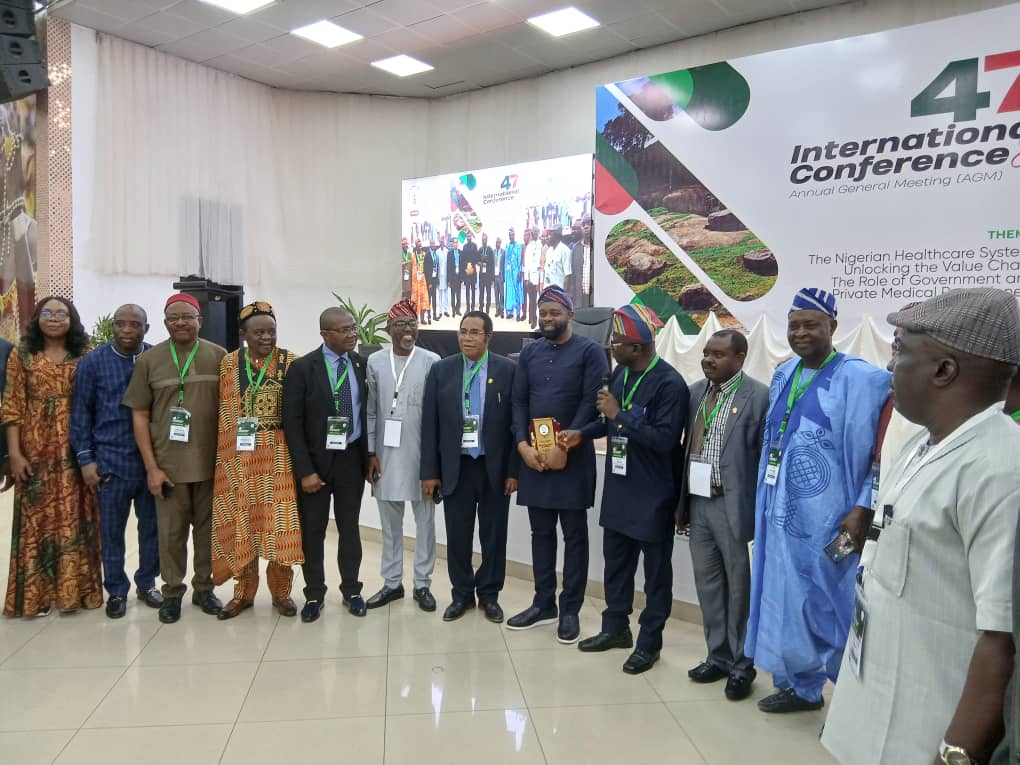
Ohiri disclosed this at the 47th International Conference and Annual General Meeting of the Association of Nigerian Private Medical Practitioners (ANPMP) with the theme: “The Nigerian Healthcare System: Unlocking the Value Chain: The Role of Government and Private Medical Practitioners,” held in Abeokuta, the Ogun State capital.
He said that Nigerians, especially the poor and vulnerable, needed to enroll in any of the health insurance schemes to save their lives and that of their family members in the current economic situation where the cost of drugs and quality healthcare service delivery are too high.
The Director General urged the federal and the state government to step up awareness about NHIA and insurance agencies operating in each states so that Nigeria citizens could enjoy quality healthcare service delivery and subsidized drugs in the face of skyrocketing inflation bedeviling the nation.
He urged Nigerians to enroll into health insurance schemes of their choice with hospitals that have better healthcare service delivery in their different states inorder to save their lives as out of pocket payment might be too expensive to bear when emergencies arises.
Ohiri said “Only about 20 million Nigerian are enrolled and our population is about 200 million that means only 10% of Nigerians are enrolled into all insurance schemes in Nigeria, some NHIA, some with the state, some private. Part of it is because it was voluntary and it’s is just be made mandatory so we expect it to increase.”
“Secondly we need to create more awareness that insurance is a better pain for health care than for you to pay when you are sick or have a problem. And thirdly you need to make sure that the quality of health care is also good so that when you are insured and go to the hospital you get a quality health care and that will make you speak well of it to somebody else.”
“Poor economic conditions should make people want to buy into health insurance because if you are poor and now sick and you don’t have insurance and you have to pay out of your pocket it will worsen you poverty, but poverty should be the reason why you should have insurance.” he noted
The President of ANPMP, Dr. Kay Adesola charged Nigerians to enroll into proper health insurance scheme to avoid falling victim of quack medical practitioners that might endanger their health and cause them untimely death.
Adesola, who described quackery as a bad omen every Nigerians including medical practitioners must fight to stamp out lauded the 10% increase in the health insurance scheme enrollment saying that it was the only increase from 3.5% since 2005 till date.
He lauded the NHIA Director General for coming up with a plan to monitor the activities of Health Maintenance Organization(HMO) to curb their poor treatments and inability to keep to agreement with medical practitioners, expressing joy that the doctors with the help of Dr. Ohiri have moved from code to one hour authorization code period.
Adesola called on the federal government to ensure not less than 15% of the yearly budget is devoted to health sector while lamenting the 5.5% given to the health sector in 2025 budget, expression optimism for better percentage in the sector in future budgets.
He, however thanked former commissioner for Health in Ogun State, Dr. Babatunde Ipaye, for his key note lecture on quacks among medical practitioners where he said that government were the major culprit in the fight against quackery in the profession.
The ANPMP President said “Quackery if we really understand what it means is a very bad omen that everybody is the society needs to join hands together to stamp out, when I say is bad omen that means it affects not only the doctors, not just our economy, it affects everybody and if you fall into the hands of a quack and by the time they finish handling your health matters and it gets to those of us that are trained to handle it what we normally see is something entirely worse than when it started from.”
“Ogun state, Lagos and Rivers State are part of the states that don’t toy with quackery at all. So that tells you in most of our state branches there is this fight against quackery and it is something that we know that is very dangerous and poisonous to the health of our citizens and since we remain the custodian of the citizens we always make sure that anything we fight against but unfortunately we don’t have all the power to fight against it”
What he(Dr. Ohiri) was saying that it was only 10% that is even something great because as at last year when this association started the first for the review of the tariff only 3.5% that is from 2005, and 2005 to this year is about 19 years. So between then and now that we have started dragging them and if it is 10% by now that means we are only moving forward and that is also because a lot of the state health insurance agencies have started functioning how did government get them to that government make sure it put in place a counterpart fund and said you set up this we will release this money for you so every states was rushing to set up the health insurance scheme so that they can benefit from that fund so that has really made it to move very fast.”
Now with the10% if you continue to collaborate with ANPMP and the national health insurance authority and the state ones are going, you will find out that this will continue to move out with great advocacy from the and government. But the budget being put out to the health sector is still too low. In 2001 all the African countries came together in Abuja they agreed that every year part of your budget that should be devoted to health sector should not be less than 15%. This year is where we have 5.5%. So we are pushing because Rome was not built in a day.” he added.
Earlier, the Ogun State Chairman of ANPMP, Dr. Oluwakayode Oyelade, said that he and his executive in the state had continue to partner with the state government in fighting against quacks in the profession and had closed down some hospitals whose operations did not meet up with the standard of the profession.
