


AffFrom Idris Khalid, Bauchi
Stakeholders from the academic, traditional, religious and community sectors have called for the establishment of strong quality assurance, transparent admission and financial management systems, affordable school fees, scholarships and effective monitoring mechanisms for the proposed Wunti International Academy (WIA) in Bauchi State.

The stakeholders made the recommendations during a community stakeholder engagement forum organised by the Wunti Al-Khair Foundation (WAKF) to shape the future of the academy ahead of its planned opening in September 2026.
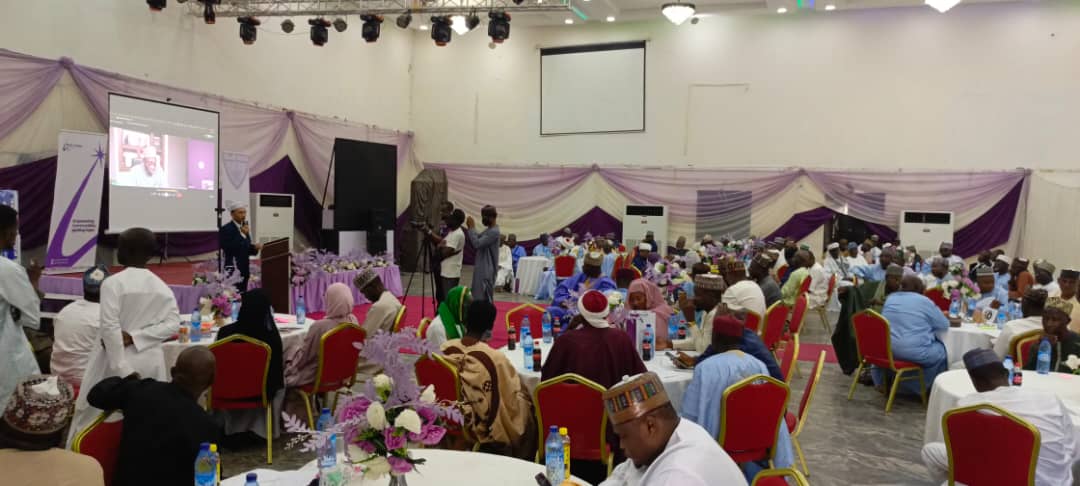
The meeting held on Sunday at Event Centre Bauchi, which attracted more than 100 participants representing parents, educators, traditional and religious leaders, government officials and community groups, was convened to gather inputs towards finalising the school’s policies, curriculum, admission structure, fee model, governance and long-term sustainability.
Discussions focused on how the academy could be maximised as a community asset, operated as a financially sustainable institution and structured to deliver educational outcomes that reflect the aspirations of the community.
Representatives of various stakeholder groups reviewed the proposed policies and responded to questions relating to curriculum, assessment, admission, school fees, scholarships, community participation, staff recruitment, accountability and the sustainability of the institution.
Presenting the recommendations of group A, a Professor in the Faculty of Science, Abubakar Tafawa Balewa University (ATBU), Prof. Ahmed Jibrin Nayaya, said the proposed academy should adopt an international curriculum while remaining aligned with Nigeria’s education system and national examination requirements.
He said the school could consider the Cambridge curriculum but stressed that whatever curriculum was adopted must enable pupils to compete internationally without losing sight of Nigerian educational requirements.
On school fees, Nayaya recommended affordable fees, arguing that parents who contributed towards their children’s education would be more inclined to take an active interest in the school and demand accountability in the management of resources.
He, however, called for clearly defined and measurable scholarship criteria to prevent abuse and ensure that support reached pupils from financially disadvantaged backgrounds.
The don also urged the school to respect the culture, values and sensitivities of the Wunti community, adding that teachers recruited from other parts of the country should understand and respect the local environment.
He advocated multiple and supervised continuous assessments conducted within the school, rather than relying heavily on take-home assignments which, he noted, could be completed by parents, siblings or other individuals.
He recommended a maximum class size of 25 pupils, saying smaller classes would enable teachers to give learners adequate individual attention and identify their academic and personal needs.
Nayaya further proposed a 60:40 assessment structure, with 60 per cent allocated to final examinations and 40 per cent to continuous assessment, stressing that the continuous assessment component should comprise regular and multiple assessments.
He recommended English as the principal language of instruction, complemented by Hausa to support comprehension and communication.
The group also proposed a five-day school week, manageable academic workloads and meaningful community participation in policymaking and major decisions affecting the institution.
Presenting the recommendations of Group B, the Dean, Faculty of Social Sciences, Sa’adu Zungur University (SAZU), Prof. Musa Adamu Wunti, stressed the need for effective monitoring and evaluation if the academy was to achieve its objective of developing the character and conduct of pupils.
He called for mechanisms to regularly assess teachers, students and the learning environment, as well as a clear performance evaluation system based on established indicators.
Prof. Wunti advocated what he described as total faculty management and urged the academy to establish a separate and independent Quality Assurance Policy, noting that existing policy documents did not adequately address the issue.
The group identified attitudinal change, learning and character development, as well as entrepreneurial skills, as key outcomes the school should pursue.
It also recommended proper enrolment records, teacher and student performance assessments, transparent annual budget documentation and disclosure of contributions from donors and development partners.
According to the group, such information should be made available to the government, the community, donor agencies and parents to strengthen transparency, accountability and the credibility of the institution.
Prof. Wunti said demonstrated accountability could also position the academy to attract partnerships and support from development agencies.
The group further recommended peer review, regular stakeholder and community engagement, policy reforms, periodic review of the recruitment process, continuous staff assessment and on-the-job training.
It also sought clarification on whether the institution would operate as a private or community school, whether it would charge fees, the categories of pupils to be admitted and whether provision would be made for feeding pupils who spend extended hours in school.
Similarly, the District Head of Dan Kade, Zailani Abdulkadir Mahmud, who represented Group E, supported the introduction of school fees, stressing that parents should make some financial contribution towards the education of their children.
He argued that a token fee would encourage parents to take greater responsibility for their children’s education and remain actively involved in their academic progress.
The traditional ruler, however, stressed that the fees should be reasonable and structured in a manner that would not undermine the philanthropic and community-oriented objectives of the institution.
Representing Group D, Prof. Haruna Abdu commended the initiative, describing the contribution of the founder of Wunti Al-Khair Foundation, Dr. Bala Maijama’a Wunti, towards improving the educational and infrastructural situation of the Wunti community as significant.
He urged the management to develop a clear enrolment strategy, noting that the academy was likely to attract applicants from Wunti and other parts of Bauchi and would therefore require transparent criteria for determining admission.
He said the management should clearly establish admission priorities, the initial number of pupils to be admitted and the criteria for admission, particularly in view of the proposed scholarship opportunities.
On sustainability, Abdu recommended that the academy explore legitimate avenues for generating internal revenue without compromising its educational objectives.
He suggested that the school’s facilities could be hired by corporate organisations and institutions for meetings, training programmes, conferences and other appropriate activities.
He also proposed holiday and vacation programmes, children’s activities and other educational initiatives that could utilise the facilities when pupils were not in session.
The group identified the school canteen and other facilities as additional potential sources of internally generated revenue.
One of the notable recommendations was the possibility of establishing a weather station at the school to generate environmental and atmospheric data that could support research and potentially create partnerships with universities and other institutions.
Prof. Abdu said such a weather station could potentially operate on solar energy and provide useful data for researchers in Bauchi.
He also stressed the need for a robust monitoring system covering the school, staff and pupils to ensure that standards established by the management were consistently maintained.
The group called for regular parent and stakeholder engagement meetings, saying parents should be treated as partners in the educational process rather than merely as people who send their children to school.
It further urged the management to ensure strict compliance with applicable rules, regulations and policies, warning that selective application of rules or failure to maintain established standards could damage public confidence in the institution.
Prof. Abdu advocated an open-door policy to promote transparency and prevent misinformation concerning admission, employment, management and other activities of the academy.
Also speaking, the Head of Wunti International Academy, Hafiz Hawaldar, said the institution would adopt a holistic and child-centred approach designed to promote the complete development of pupils.
Hawaldar said the academy would not focus solely on academic performance but would also pay attention to the physical, intellectual, moral and spiritual development of every child.
He said the academy would operate a blended curriculum combining the Cambridge British curriculum with the Nigerian national curriculum, Islamic values and local heritage.
According to him, the approach is designed not only to help pupils excel academically but also to encourage lifelong learning and enable them to discover and develop their individual potential.
“Nigerian children possess tremendous potential. The greatest loss to a society is not necessarily the loss of money or financial resources; it is the loss of human potential,” he said.
Hawaldar said the academy’s holistic education model would seek to nurture future leaders and lifelong learners capable of maximising their potential and contributing meaningfully to society.
He also explained that the child-centred approach would require the school to understand each child’s psychology, behaviour, abilities, interests and individual needs.
“We will therefore strive to design and implement our curriculum in a way that responds to the needs and requirements of each child,” he said.
He said the two philosophies holistic education and a child-centred approach, would guide the educational system of the academy.
Hawaldar further said the vision behind the institution was to provide internationally competitive education in Bauchi and reduce the need for families to relocate to cities such as Abuja and Lagos in search of quality education.
He described the academy as a community-owned project and invited stakeholders to continue providing recommendations, feedback and professional input on the curriculum and other aspects of the institution.
“I belong to you and to this community. Insha Allah, I will work towards achieving the vision and goals set by our Chairman, Dr. Bala Banti,” he said.
Earlier, the founder of Wunti Al-Khair Foundation, Dr. Bala Maijama’a Wunti, reaffirmed the vision behind the academy, describing it as an institution designed to combine a British-curriculum-structured learning environment with strong Islamic values while remaining firmly rooted in Bauchi.
He said the academy’s guiding philosophy was encapsulated in its motto: “Learn. Lead. Light the Way.”
In his welcome address, Bashir Wunti said the forum was organised not to present a finished institution to the community but to listen to stakeholders and incorporate their practical recommendations.
“We came into this forum not to present a finished school, but to listen,” he said, adding that the discussions had demonstrated that the community had clear and practical ideas about what the academy should deliver.
The Director of Programmes, Wunti Al-Khair Foundation, Ango Mustapha, who facilitated the engagement, said the discussions produced concrete recommendations on affordable fee structures, waqf-based subsidy support for underserved families, religious and cultural alignment, extracurricular activities and community-facing programmes.
He said the recommendations were presented to the wider assembly before the conclusion of the engagement, alongside WAKF’s initial response on areas requiring immediate action and those requiring further consideration.
The forum also witnessed the formal introduction of the academy’s Head of School to the community and the nomination of community representatives to serve on the WIA school board.
Mustapha said the move was intended to embed community participation directly into the governance structure of the institution.
“This is not the end of the conversation; it is the start of a relationship,” he said, adding that the recommendations would feed into the finalisation of the academy’s fee model, educational outcomes and broader community engagement strategy.
WAKF said the inputs gathered at the forum would be consolidated into a Stakeholder Input Report, while a standing Parent-Community Advisory Committee would be established to sustain community participation beyond the academy’s opening.
Wunti International Academy is expected to open for admissions in September 2026, offering programmes from Preschool through Year 6, with phased expansion planned through the 2030/31 academic year.
Across the various groups, stakeholders emphasised that community participation, accountability, quality education and sustainability should remain central to the development of the academy.
They also called for the institution to combine international educational standards with local values and Nigeria’s educational requirements, while creating an environment capable of preparing pupils to compete with their counterparts anywhere in the world.
The stakeholders said the engagement was crucial to ensuring that the academy was not only physically established but also built on sound policies, professional management, community ownership and a sustainable educational model.
