


By Ayo Arowojolu
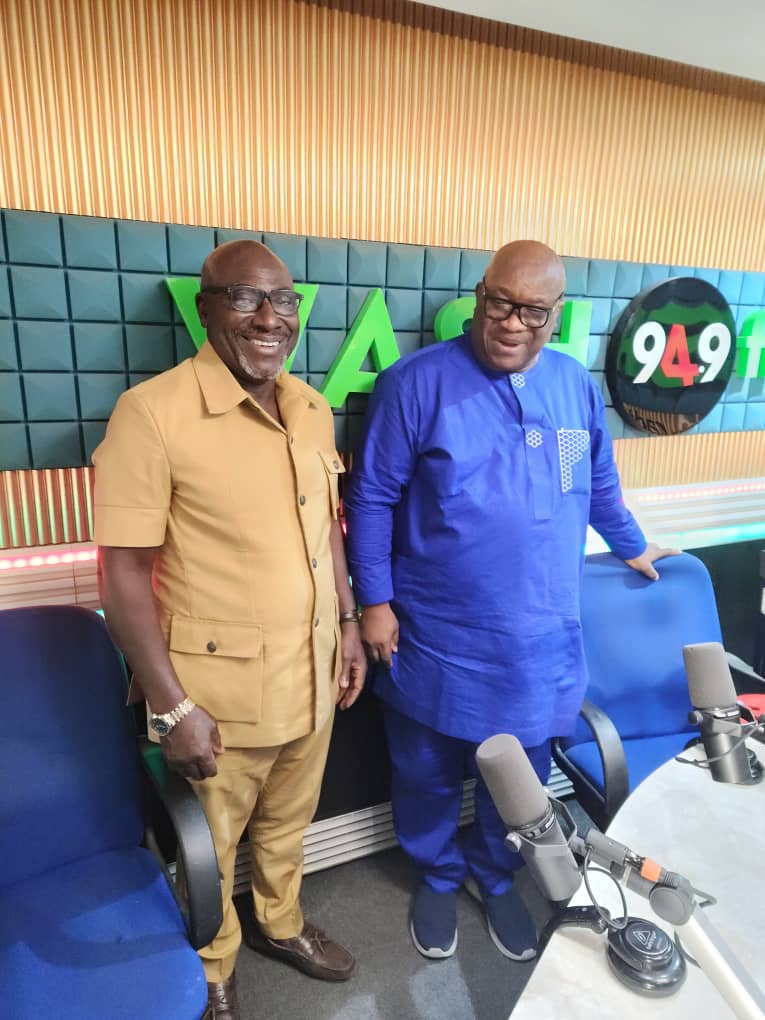
A live radio discussion on WASH 94.9FM on Thursday exposed sharp but nuanced divisions among media stakeholders over a recent directive issued by the National Broadcasting Commission (NBC), with leading voices agreeing on the need for ethical standards but warning against ambiguity and potential regulatory overreach.
Speaking during the programme, former Lagos State Chairman of the Nigeria Union of Journalists (NUJ), Mr Lanre Arogundade, described the NBC’s position as a “mixed bag,” acknowledging its emphasis on professionalism while cautioning that parts of the directive could be interpreted as vague and even intimidating.
Arogundade noted that media practitioners have consistently supported ethical journalism, including avoiding hate speech and promoting conflict-sensitive reporting, particularly during electoral processes. However, he argued that the NBC’s latest statement introduces loosely defined concepts that could create uncertainty within the broadcast space.
According to him, terms such as “inflammatory rhetoric,” “intimidation,” and “bullying” were not clearly defined, raising concerns about how broadcasters might be judged or sanctioned.
“You invite guests onto a programme without knowing exactly what they will say,” he explained. “If a guest makes a comment deemed inflammatory, should the broadcaster be held responsible? These are questions the NBC has not clearly addressed.”
He further warned that even routine journalistic practices—such as asking probing or challenging questions—could be misinterpreted as intimidation under the broad language of the directive.
Arogundade also criticised the NBC for what he described as selective regulatory attention, pointing out the absence of visible action in cases where journalists face threats. He referenced a recent public spat involving a senior government official and a broadcaster, arguing that the commission should not only regulate but also protect media practitioners.
“There is a duty on the regulator to ensure journalists can operate freely within constitutional provisions,” he said, adding that failure to act in such situations weakens confidence in the commission’s neutrality.
On his part, media rights advocate Edetaen Ojo of Media Rights Agenda offered a more balanced perspective, defending the NBC’s authority to issue such guidelines while still echoing concerns about ambiguity and institutional structure.
Ojo stated that the commission acted within its statutory mandate by reminding broadcasters of professional standards, especially in the build-up to elections—a period often marked by heightened misinformation and divisive rhetoric.
“Globally, there is growing concern about hate speech and disinformation, and regulators are under pressure to respond,” he said. “In that context, the NBC’s intervention is understandable and appropriate.”
However, he agreed that the lack of clear definitions for key terms in both the statement and the Nigerian Broadcasting Code leaves room for subjective interpretation and possible abuse.
Ojo stressed that journalism inherently involves holding power to account, which requires asking difficult questions and demanding answers from public officials—actions that should not be misconstrued as bullying or intimidation.
He also clarified the distinction between factual reporting and opinion-based programming, arguing that while news reporting must remain strictly factual, discussion and analysis programmes naturally accommodate opinions.
“Journalists and broadcasters do not lose their constitutional right to hold and express opinions simply because they are professionals,” he said.
Beyond the immediate concerns, Ojo raised deeper structural issues regarding the independence of the NBC. He pointed out that the commission operates under the supervision of the Minister of Information, a situation he described as problematic.
Citing provisions of the NBC Act, he warned that the Minister’s authority to issue directives could expose the Commission to political influence, particularly if used to suppress dissenting voices in the media.
“If a ruling party is unhappy with a broadcast, there is a risk that the NBC could be used as a tool to enforce compliance,” he said. “That is why, in the long term, we must push for a truly independent regulatory body.”
Both speakers ultimately agreed on the importance of maintaining high ethical standards in broadcasting, especially during politically sensitive periods, but insisted that such regulations must be clear, fair, and free from political interference.
The discussion underscores ongoing tensions between regulation and press freedom in Nigeria’s media landscape, particularly as the country approaches another electoral cycle.
