


By Priscilla Iyabo Awojuola
When the future of Ogun State is being discussed, the most important question is not who wants to lead but who can translate public resources, experience, and political opportunity into a better life for the people.

In politics, a name can become a movement. A slogan can fill a stadium. A crowd can create the impression of popularity. But history has a more demanding way of measuring leadership: what changes in the lives of ordinary people because someone was entrusted with public responsibility?
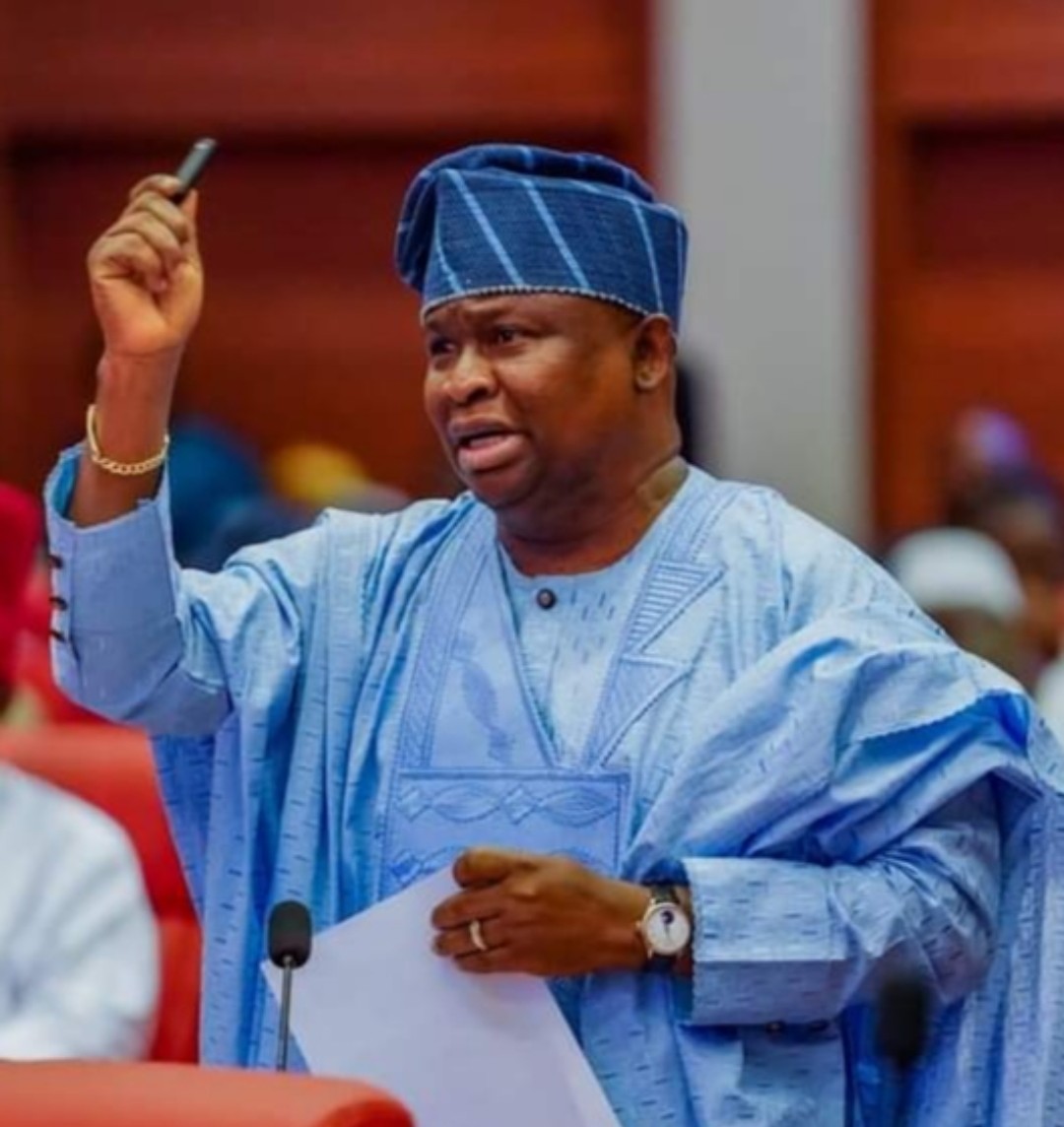
That is the question confronting Ogun State as preparations for the 2027 governorship election gather momentum. It is also the question that places Senator Solomon Olamilekan Adeola, popularly known as Yayi, at the centre of an important conversation about political representation, development, and the future of our state.
Yayi is not entering this conversation as a stranger to public office. His legislative career, experience in public finance, and current position as Chairman of the Senate Committee on Appropriations form part of the background against which his aspiration must be assessed. But experience, on its own, is not the destination. Its real value lies in what it enables a leader to accomplish.
*THE EVIDENCE BEHIND THE POLITICAL NAME*
Across Ogun State, the development projects associated with Adeola’s representation have become a significant part of the political conversation. Reports on his constituency interventions have highlighted road construction and rehabilitation, school infrastructure, primary healthcare facilities, markets, electricity transformers, solar streetlights, and community security facilities.
The scale of these interventions deserves attention, alongside the important responsibility of independently verifying project completion, functionality, and their actual benefits to residents.
In education, Adeola’s interventions have included classroom construction, information and communication technology centres, educational materials, and bursary and scholarship support. A recent example reported in October 2026 was a 12-classroom block at Iju Ebiye Secondary School and an ICT centre equipped with 60 desktop computers at Lisabi Grammar School in Abeokuta
These are not insignificant areas of investment. A classroom offers more than a roof over a student’s head; it creates a space for learning. Access to computers can widen a young person’s understanding of a world increasingly shaped by technology. Financial support for students can ease some of the pressure on families struggling to keep their children in school.
Yet, the ultimate test is not the commissioning ceremony. It is whether these facilities remain functional, whether teachers and students can use them effectively, and whether the interventions translate into better educational opportunities.
In healthcare, reported constituency projects include primary healthcare centres and intensive care facilities. In commerce, modern markets have featured among the projects associated with his representation. Roads and other infrastructure have also featured prominently across Ogun State.
These interventions provide a basis for discussing his record. They also establish a standard against which any future promises should be measured: completion, maintenance, accessibility and measurable public benefit.
*FROM CONSTITUENCY PROJECTS TO STATE WIDE TRANSFORMATION*
Here lies the bigger question.
A senator’s responsibilities differ from those of a governor. Constituency projects can address urgent needs, but governing an entire state requires a wider vision, effective institutions, disciplined public finance, and a clear understanding of the relationship between economic growth and household welfare.
Ogun State needs more than beautiful roads and impressive buildings. It needs an economy in which young people can find meaningful work, businesses can grow, farmers can access markets, public schools can deliver quality education and healthcare does not become a financial burden that pushes families into hardship.
The state also needs to maximise its strategic position as an industrial and commercial gateway while ensuring that the benefits of development reach communities beyond the major urban centres.
Adeola’s September 2026 presentation of a nine-point development agenda titled: “ITESIWAJU” reportedly identified infrastructure, employment, agriculture, healthcare, education, industrialisation, public finance, and institutional reform among its priorities.
The significance of such an agenda will ultimately depend on the details: how the proposals will be financed, how implementation will be monitored, what measurable targets will be set and how the public will be able to hold the government accountable.
A development agenda becomes meaningful when it moves from paper to practice and from official announcements to tangible improvements in people’s lives.
*THE PEOPLE MUST REMAIN THE CENTRE OF THE CONVERSATION*
There is another dimension to leadership that political calculations sometimes overlook: the dignity of the ordinary citizen.
The trader who opens a shop before sunrise, the farmer who depends on a productive season, the civil servant who must stretch a salary to meet family obligations and the graduate searching for a first job are all participants in the future being debated.
Their concerns should not be reduced to campaign statistics. They deserve policies that recognise their daily realities.
The value of political representation should, therefore, be measured not only by the number of projects announced or completed, but also by the opportunities created, the institutions strengthened, and the burdens removed from ordinary people.
For Yayi, the challenge is to demonstrate how his experience and reported development interventions can inform a coherent, inclusive, and accountable programme for Ogun State. For his supporters, the opportunity is to make the conversation about evidence, ideas, and public service rather than personalities alone.
For the electorate, the responsibility is to examine the record, question the proposals, and demand clarity on the promises being made.
*A LEGACY IS NOT ANNOUNCED, IT IS ESTABLISHED*
Political history is generous with names but selective about legacies. Many politicians have enjoyed moments of popularity. Far fewer have built reputations that endure because their work continues to benefit people long after the excitement of an election has passed.
That is why the conversation about Yayi should extend beyond the familiarity of his name. It should examine the substance of his record, the practicality of his vision, and the quality of the leadership he proposes to offer.
If the projects attributed to his representation are sustained, the lessons from them translated into stronger public institutions and the needs of every part of Ogun State placed at the centre of policy, his experience could provide a useful foundation for the larger responsibility he seeks.
But the people must remain the ultimate judges. No title, political structure, or campaign slogan can substitute for that verdict.
As Ogun State looks towards 2027, one question deserves to remain before every aspirant and every voter:
*What kind of future are we building, and how will the people know that we have truly arrived?*
The answer will not be found in the loudest campaign or the largest crowd. It will be found in the quality of governance, the credibility of commitments, and the difference leadership makes in the lives of the people.
That is the standard against which every aspiration must stand—and the standard against which Yayi, like every other contender, should be judged.
