


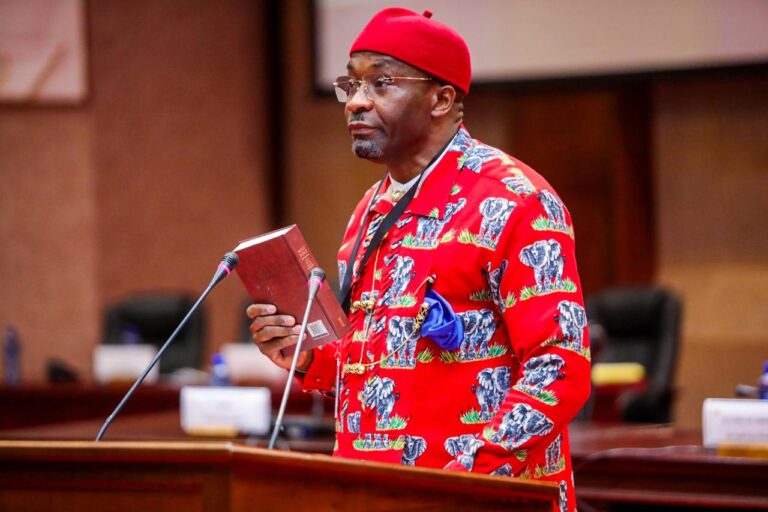
Following public outcry and backlash that trailed his bill on indigeneship, Deputy Speaker of the House of Representatives, Benjamin Okezie Kalu, has announced the withdrawal of the proposed legislation.
According to Kalu, he decided to withdraw the bill before the parliament for further legislative engagements.

The proposed bill, among others, seeks to confer indigeneship on the basis of birth, continued residence in a place in not less than 10 years or on the basis of marriage.
Kalu, in a statement on Tuesday night by his Chief Press Secretary, Levinus Nwabughiogu, said withdrawing the bill became necessary in the light of the concerns and “constructive feedback” received from various stakeholders regarding the bill.
The deputy Speaker added that the Bill Analysis Report, forwarded by the National Institute for Legislative and Democratic Studies also made it imperative for him to immediately step down the bill.
The report stated, “Although the intention of the bill was to promote national unity, equity, and inclusiveness among all Nigerians, regardless of where they reside, part of the report stated that the State Houses of Assembly should make laws that will make settlers in different states enjoy the same rights and privileges by the indigenes.
“States should make laws that would allow settlers to benefit same rights and privileges enjoyed by indigenes without any form of discrimination as rightly provided for in the constitution.
“Though the Bill seeks to achieve some commendable objectives, however, this can be achieved through enactment of law. If this Bill is passed, it would pose challenges with time especially on the issue of double or multiple indigeneship.”
Kalu, who is also the chairman of the Constitution Review Committee of the House, expressed his commitment to ensuring that every legislative proposal reflects the wishes of the people.
He said, “As leaders and Representatives, we remain committed to ensuring that every legislative proposal reflects the aspirations of the people we serve.
“The Constitution Review process remains an open, inclusive, and participatory exercise, and no provision or proposal will be pursued without adequate dialogue and consensus-building.
“I therefore call on citizens to continue engaging constructively with the House Committee on Constitutional Review as we work together to build a more just, united, and prosperous Nigeria.”
The bill has drawn backlash from Nigerians, especially on the social media, just as two members of the House of Representatives, James Abiodun Faleke and Blessing Amadi from Rivers State distanced themselves from the bill.
