


By Niyi Maraiyesa
The dust may have settled after the APC senatorial primaries in Ogun State, but beneath the surface of the calm lies a deeper political reality, one that may redefine the future of the ruling party and the balance of power in the Gateway State ahead of 2027.

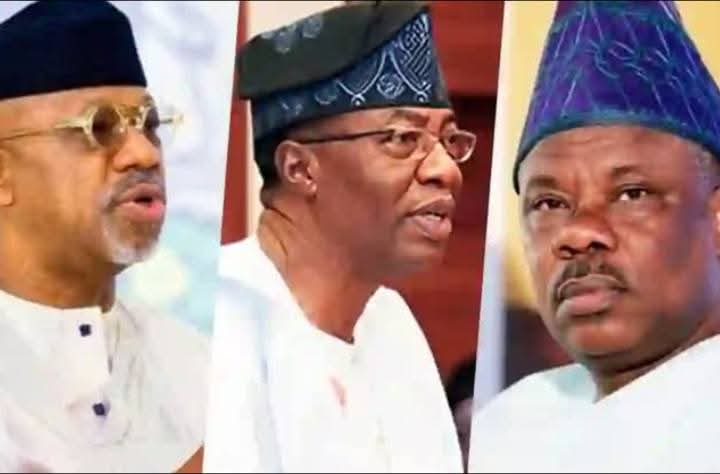
For months, Ogun politics revolved around an intense and highly anticipated confrontation involving three dominant political figures – Governor Dapo Abiodun; former governor Gbenga Daniel, and former governor Ibikunle Amosun. The battle was not just about senatorial tickets; it was a struggle for relevance, influence, survival and control of the political structure of Ogun State.
Now, with the primaries concluded, a new phase has emerged.
In Ogun East Senatorial District, Governor Dapo Abiodun appears to have secured a major political victory. Long before the primaries held, powerful blocs, party elders, stakeholders and influential figures across the district openly endorsed the governor for the APC senatorial ticket. The endorsements gradually created the impression that the political establishment within Ogun East had aligned behind the governor.
For Senator Gbenga Daniel, however, the situation was far from straightforward.
The former governor and current senator representing Ogun East refused to quietly surrender political ground. Tension steadily rose within the district as competing camps mobilised support. But in a dramatic move before the primaries, Daniel directed his loyalists and supporters to stay away from the exercise, insisting that his decision was aimed at preventing violence and avoiding clashes between supporters of both camps.
That singular decision changed the political atmosphere completely.
By withdrawing his supporters from active participation, Gbenga Daniel avoided what could have become an openly confrontational contest. Rather than allowing the crisis to escalate into chaos, he positioned himself as a leader prioritising peace and stability over political aggression.
Politically, this was significant.
While Governor Abiodun demonstrated clear control of the state party structure and delegate system, Gbenga Daniel preserved something equally important – his political dignity and grassroots relevance. In politics, perception matters, and Daniel’s strategy prevented the narrative of outright political defeat.
In Ogun Central, another silent battle unfolded. Former governor Ibikunle Amosun, known for his deep political roots and loyal base in the Egba axis, sought to reclaim influence through the APC senatorial ticket in Ogun Central. However, the incumbent Senator Shuaib Afolabi Salisu eventually emerged victorious from the primaries, signaling another major statement about the current balance of power within Ogun APC.

The outcome suggests that while Amosun remains influential, the political equation within the party may be shifting away from the old order toward a new structure controlled largely by the present leadership of the party in the state.
Yet, despite the outcomes of the primaries, there is an unusual calm across the APC in Ogun State. No major public rebellion. No dramatic defections. No direct war of words.
Interestingly, amid the tension surrounding Ogun East and Ogun Central, one figure appears to stand above the conflicts – Senator Olamilekan Adeola. Unlike the visible struggles surrounding other contests, Adeola’s position within the APC appears relatively stable and broadly accepted. That sense of consensus around his candidacy may eventually place him in a powerful strategic position within the party’s future calculations
But that calm itself may be deceptive. What Ogun APC appears to be experiencing now is not necessarily peace, but political caution. The reason is simple: the final authority still rests with the national leadership of the APC in Abuja, where the collated results and recommendations from the state have been forwarded for ratification.
Every major political actor is now carefully watching the next move.
For Governor Dapo Abiodun, the primaries strengthened his image as the dominant force controlling the current APC structure in Ogun State. For Gbenga Daniel, the battle may have shifted from open confrontation to strategic patience. For Ibikunle Amosun, silence itself may become a political weapon depending on how events unfold in the coming months.
Interestingly, amid the tension surrounding Ogun East and Ogun Central, one figure appears to stand above the conflicts – Senator Olamilekan Adeola. Unlike the visible struggles surrounding other contests, Adeola’s position within the APC appears relatively stable and broadly accepted. That sense of consensus around his candidacy may eventually place him in a powerful strategic position within the party’s future calculations.
Still, the biggest lesson from these primaries is that Ogun politics has entered a new era. The era of open political warfare may gradually be giving way to silent negotiations, tactical alliances and calculated coexistence among powerful forces that understand they still need one another for survival.
The “Three Kings” of Ogun politics may no longer be fighting loudly in the open, but their influence remains deeply woven into the political destiny of the state.
And as 2027 approaches, one thing is becoming increasingly clear: The real battle may no longer be about who wins a primary, but who ultimately controls the future political soul of Ogun State.
