


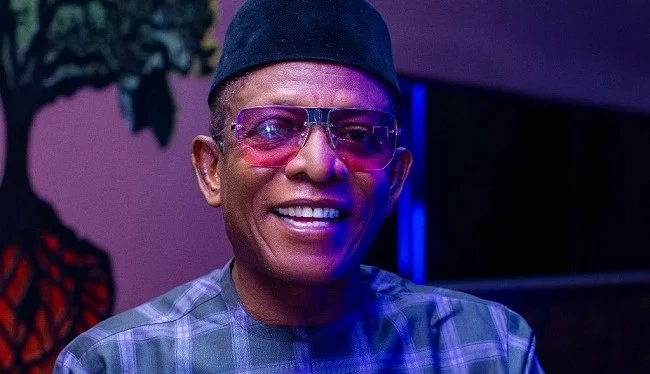
Veteran Nollywood actor Nkem Owoh, popularly known as Osuofia, has clarified his comments on the origins of Nigeria’s home-video industry, insisting that Yoruba filmmakers pioneered home video, not Nollywood.
Osuofia made the clarification during an appearance on Curiosity Made Me Ask, hosted by comedian and content creator Adebayo Abidemi, popularly known as Bae U.

The interview, which was published on the host’s YouTube channel on Saturday, saw the actor respond to a question about his alleged claim that Yoruba people started Nollywood rather than the Igbo.
The comments arrived months after late veteran Nollywood actor Francis Duru sparked debate in August 2026, arguing that the Igbo built Nollywood but the Yoruba community has become more dominant because of its ability to organise and promote its own.
Duru, who died in October, argued that the modern Nollywood home-video industry was largely driven by Igbo entrepreneurs during the 1990s and early 2000s.
At the time, Osuofia was reported to have dismissed the claim, saying that the Yoruba people were already deeply involved in filmmaking, theatre and “stage performances long before the Igbo-led home-video boom of the 1990s.
Rejecting the suggestion that Yoruba people started Nollywood, Osuofia explained that the name Nollywood did not exist when he and other filmmakers began making films, adding that it was adopted later after discussions among industry stakeholders.
He said, “First of all, you have given me this wrong accusation that I said, Yoruba started Nollywood. No. Yoruba started this film on…when did Nollywood come out? When we started the thing, there was no Nollywood as a name. We sat together and we’re banding, you know, ideas and all that, how the thing is going to come to fruition. And eventually, we chose Nollywood.”
The veteran actor, however, credited Yoruba filmmakers, including veteran filmmaker Hubert Ogunde and Adebayo, for popularising home-video productions in Nigeria.
He said, “So, Yoruba started the thing. They made the thing very popular home video and all that. Yes, they did. And I’ve said it several. Okay. Ogunde and Adebayo Papa. These are the people I love to watch their thing.”
When the interviewer jokingly suggested that Ogunde was Igbo, Owoh disagreed, insisting that the veteran filmmaker was Yoruba.
“Ogunde is not Igbo. I’m telling you that Yoruba started it. When Ogunde was out, I don’t think there was any Igbo man who was that popular in that,” he said.
He further clarified the distinction between the origins of Nollywood and the home-video tradition, saying, “The Yoruba did not start Nollywood. They started Home video.”
Osuofia’s clarification comes amid long-running debates about the ethnic contributions to Nigerian cinema.
Historical accounts note that Yoruba travelling theatre groups, led by figures such as Hubert Ogunde, Duro Ladipo and others, transitioned from stage to early film and video productions in the decades before the 1990s boom.
The commercial explosion of the direct-to-video market is widely associated with the 1992 Igbo-language hit Living in Bondage, produced by Kenneth Nnebue, which helped popularise the format that later became globally known as Nollywood. The term “Nollywood” itself was coined years later.
In September 2026, PUNCH Online veteran actor Pete Edochie appeared on Isbae U’s show and declared that he had no favourite actor because he considered himself bigger than all his colleagues.
Edochie challenged anyone claiming to be on the same professional level as him to come forward publicly, while noting that his own stage career dated back to 1962—well before the formal emergence of Nollywood.
(Punch)
