


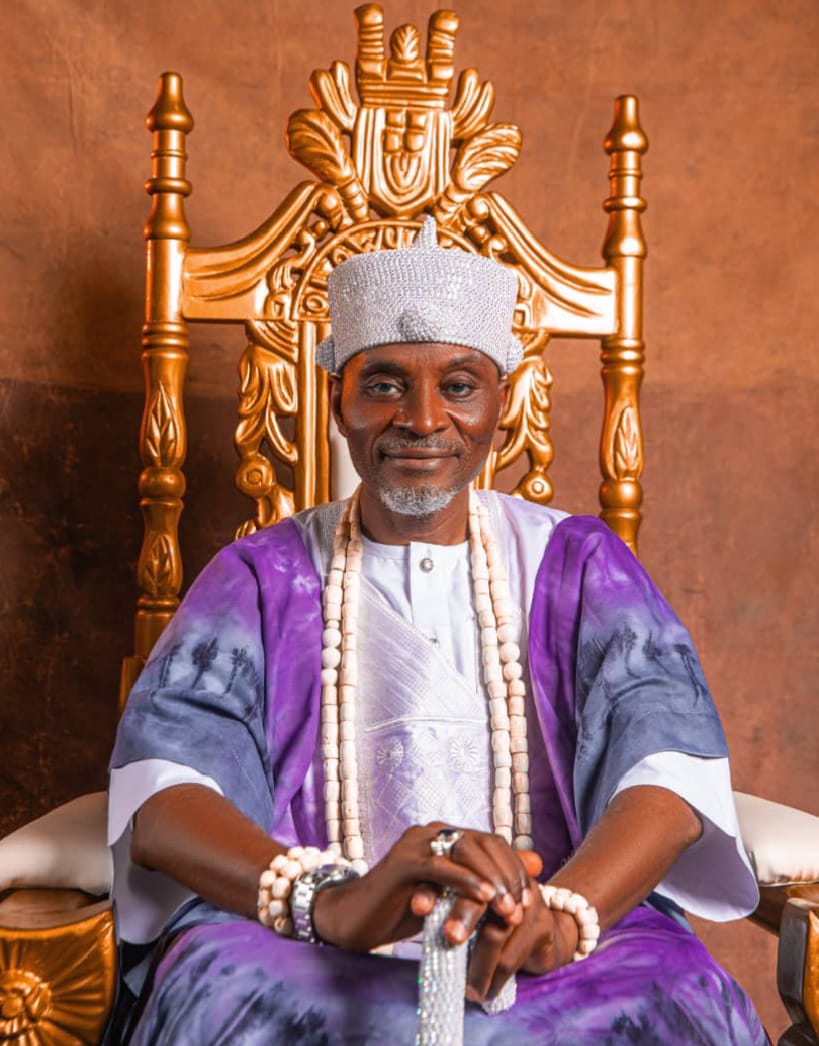
By Ayo Arowojolu
When history is eventually written about the contemporary evolution of traditional institutions in Nigeria, the reign of His Royal Majesty, Oba (Prof.) Saka Adelola Matemilola, Oluyalo Otileta VII, Olowu of Owu Kingdom, will undoubtedly occupy a conspicuous spatial. The reason is not far-fetched. There are monarchs who inherit crowns, and there are monarchs who redefine them. In the annals of the Owu Kingdom, the reign of His Royal Majesty, Oba Matemilola, belongs to the latter category.

Ascending the revered throne of his forefathers four years ago, Oba Matemilola inherited not only one of the most historically significant crowns in Yorubaland but also the enormous responsibility of preserving a rich cultural heritage while positioning the Owu Kingdom for relevance in a rapidly changing world, and bringing to the fore uncommon dignity, intellectual depth and global visibility to the ancient stool.
For Oba Matemilola, the celebration, a week-long lineup of events which began on Monday July 27, 2026, transcends the customary rituals of royalty. It is a fitting moment to evaluate a reign that has steadily repositioned the Owu monarchy as a beacon of enlightened traditional leadership, cultural renaissance and global engagement.
Four years may be a relatively short period in the lifespan of an ancient kingdom whose history spans centuries, yet the impact of Oba Matemilola has been profound, visible and enduring. His reign has injected fresh vitality into the traditional institution while preserving the values that have defined the Owu people since antiquity.
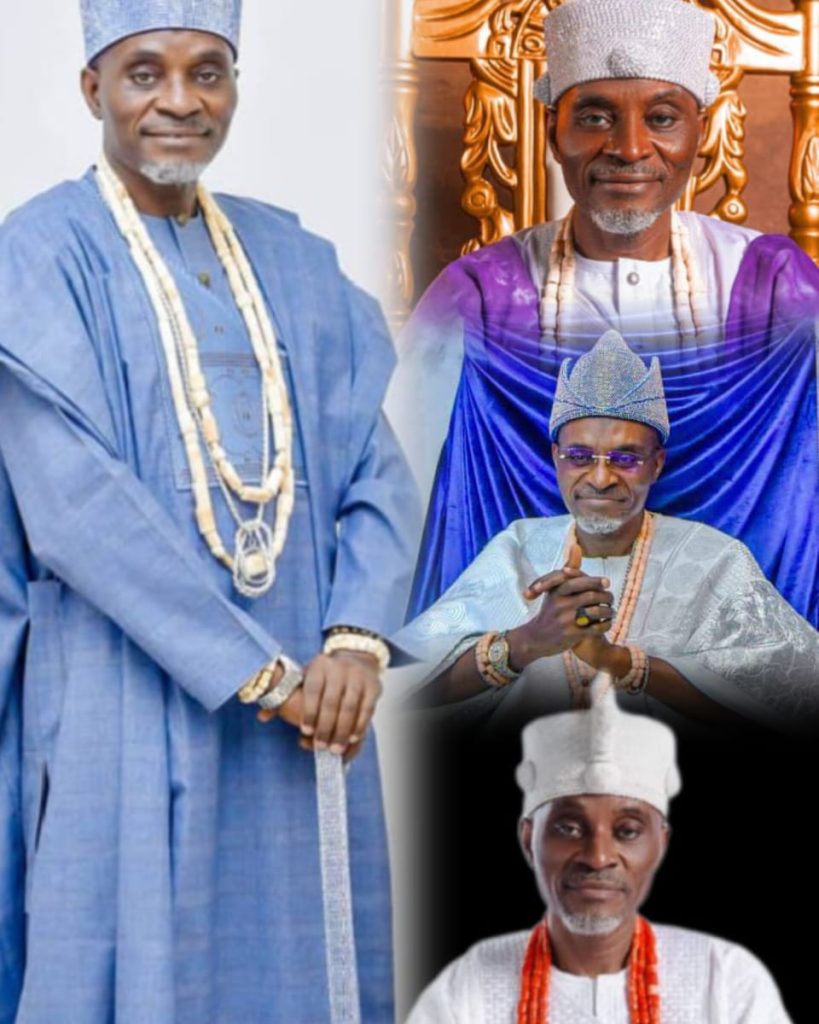
One of the greatest distinctions of Oba Matemilola is that he ascended the throne not merely as a prince but as an accomplished scholar and seasoned administrator. Long before destiny beckoned him to the palace, he had built a remarkable reputation in academia and public service.
That intellectual foundation has become one of the defining characteristics of his monarchy.
His speeches are thoughtful, his interventions analytical, and his decisions reflective of a leader who appreciates both history and the demands of contemporary governance.
Kabiyesi represents a new generation of Nigerian traditional rulers who understand that the palace must remain relevant not only as the custodian of culture but also as an institution capable of inspiring social transformation. Indeed, his reign demonstrates that scholarship and royalty are not mutually exclusive but mutually reinforcing.
The Owu Kingdom occupies a unique place in Yoruba history. From the legendary Owu wars to the eventual resettlement in Abeokuta, the kingdom has remained one of the most influential traditional institutions in Yorubaland. The Olowu stool therefore carries immense historical significance.
Since his enthronement in 2022, Oba Matemilola has worked tirelessly to elevate the prestige of that stool beyond ceremonial functions. Through strategic engagements with governments, academic institutions, diplomatic communities, cultural organisations and development partners, he has projected Owu Kingdom onto national and international platforms.
Today, the Olowu is increasingly recognised as one of Nigeria’s most intellectually respected traditional rulers—a monarch whose opinions command attention because they are informed by wisdom, scholarship and patriotism.
Perhaps one of the most remarkable features of Oba Matemilola’s reign is his international outlook. In an era where traditional institutions must increasingly engage the global community, the Olowu has emerged as an effective ambassador of Owu heritage and Yoruba civilisation.
His participation in international engagements has strengthened cultural diplomacy, fostered valuable relationships and projected the rich traditions of Owu Kingdom beyond Nigeria’s shores. These interactions have not merely enhanced the visibility of the kingdom; they have also opened conversations around tourism, investment, cultural exchange and diaspora engagement. The monarch understands that in today’s interconnected world, kingdoms can no longer afford to remain isolated, and does not view development as an abstract concept.
Throughout the past four years, he has consistently advocated stronger partnerships capable of improving education, healthcare, youth empowerment, entrepreneurship and community development.
Rather than limiting the role of traditional rulers to ceremonial functions, he has demonstrated that royal institutions can become catalysts for sustainable development.
His palace increasingly serves as a meeting point where ideas are exchanged, collaborations initiated and solutions pursued for the benefit of the people. That developmental philosophy has become one of the enduring hallmarks of his reign.
Avid watchers of the traditional institution in Nigeria say the Olowu’s reign has witnessed renewed emphasis on cultural preservation, traditional festivals, historical documentation and the promotion of indigenous values. He recognises that culture is not simply entertainment but the moral compass that binds generations together. By encouraging young people to embrace their heritage while equipping them for modern realities, the Olowu has successfully bridged the divide between tradition and contemporary society.
Oba Matemilola is a Monarch Who Unites. One of the greatest challenges confronting many communities today is division. The Olowu has consistently responded to this challenge by promoting reconciliation, dialogue and unity.
He has repeatedly reminded Owu sons and daughters—both at home and in the diaspora—that genuine development is impossible without collective purpose. His leadership style is inclusive rather than divisive. He listens before he speaks and consults before decisions are taken. His unique style encourages consensus rather than confrontation. These qualities have strengthened confidence in the traditional institution and reinforced the palace as a symbol of communal harmony.
Significantly, there is the human face and empathy he applies in nearly all situations. Despite the dignity and grandeur associated with the throne, those who have encountered Oba Matemilola frequently speak of his humility, warmth and accessibility. He possesses an uncommon ability to make people feel valued regardless of status. That rare combination has endeared him to many beyond Owu Kingdom. It also explains why respect for his leadership continues to grow across Ogun State and Nigeria.
For the entire span of this week, till Sunday 2nd August, 2026, as the fourth anniversary of Oba Matemilola’s coronation is being commemorated, there is ample justification for celebration. Every anniversary is both a celebration and a reminder, celebrating, on the one hand, accomplishments, while serving as a reminder that history is still being written.
For Oba (Prof.) Saka Adelola Matemilola, the first four years have established a firm foundation for what promises to be an enduring and impactful reign. Indeed, the Owu Kingdom has every reason to celebrate a monarch who has become more than a custodian of tradition. He has emerged as a bridge between the past and the future, between culture and development, between scholarship and royalty.
As drums echo across Owu land and goodwill messages pour in from within Nigeria and beyond, one sentiment rises above all others: gratitude for a reign that has brought honour to the throne and pride to the Owu people.
