


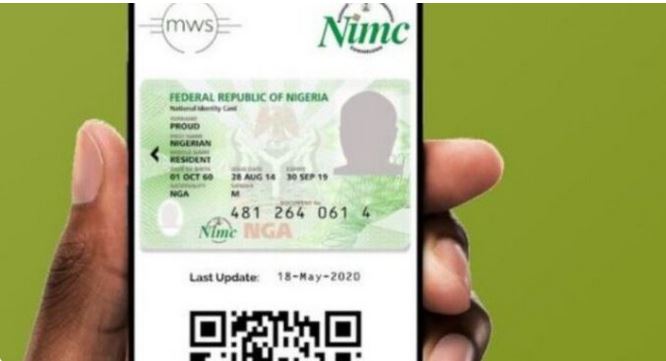
National Social Safety Nets Coordinating Office says more than 12.3 million Nigerians have so far been linked to the National Social Register through their National Identification Numbers as part of efforts to strengthen transparency and credibility in the delivery of social interventions.
NASSCO National Coordinator, Dr. Funmi Olotu, disclosed this on Thursday in Abuja during a high-level stakeholder engagement with local government chairmen themed, “Strengthening Local Government Leadership for Inclusive Development and Social Protection Delivery.”
According to Olotu, integration of the National Identification Number into the National Social Register is aimed at improving data integrity, eliminating duplication and ensuring that government interventions reach the right beneficiaries.
She said the Federal Government was intensifying efforts to build a more credible and accountable social protection system in line with President Bola Tinubu’s Renewed Hope Agenda.
She said, “To strengthen this foundation, we are integrating the National Identification Number into the Register. This reform enhances data integrity, eliminates duplication, and ensures that interventions reach the right people with precision and credibility.”
The NASSCO boss disclosed that the National Social Register currently covers over 20 million households and more than 77 million individuals across the 36 states and the Federal Capital Territory.
“At the centre of this effort is the National Social Register, a national platform designed to identify and support poor and vulnerable households across the country,” she said.
Giving an update on the exercise, Olotu said significant progress had already been recorded across the federation.
“Across 37 states and 774 Local Government Areas, covering 8,756 wards and 217,777 communities, over 9.7 million household records have been updated, with 12.3 million NINs captured and 11.5 million successfully validated,” she stated.
She stressed that effective social protection could not be driven solely from Abuja, noting that local governments remained critical to successful implementation because of their closeness to communities.
“Local Governments are not merely administrative structures, but institutions of service delivery, closest to the people and essential to translating policy into real outcomes in citizens’ lives,” Olotu said.
She urged local government chairmen to take ownership of the NIN integration process and ensure effective grassroots coordination.
“You are not just stakeholders in this process. You are the drivers of execution. You are closest to the communities, you understand the realities on the ground, and you are uniquely positioned to ensure effective implementation of the NIN integration process,” she added.
Permanent Secretary, Federal Ministry of Humanitarian Affairs and Poverty Reduction, Olubunmi Olusanya, who also spoke at the event, described the National Social Register as a critical pillar in Nigeria’s poverty reduction and humanitarian response framework.
Olusanya said the ministry was advancing a “One Humanitarian–One Poverty Response System” to harmonise interventions and strengthen coordination across government institutions.
“The National Social Register remains a central pillar of this architecture. It provides a credible and verifiable basis for identifying poor and vulnerable households.”
He said the integration of NIN into the register would significantly reduce duplication and improve the reliability of data used for planning and programme delivery.
He warned that millions of vulnerable Nigerians could risk exclusion from government interventions without full NIN integration.
“Without full NIN integration, many of them risk being excluded or unable to benefit from government interventions,” he said.
Olusanya also emphasised the importance of local government authorities in ensuring the credibility and effectiveness of the programme.
“Local Governments are not peripheral to this process, they are central to its success. Indeed, they represent the first line of credibility, verification, and last-mile delivery,” he stated.
The stakeholder engagement brought together local government chairmen, officials of the Association of Local Governments of Nigeria, development partners, civil society organisations and other stakeholders involved in social protection delivery across the country.
The Federal Government has in recent years intensified reforms aimed at strengthening the National Social Register amid concerns over transparency, targeting and accountability in social intervention programmes. The integration of NIN into the database is expected to improve the accuracy of beneficiary records and enhance the efficiency of poverty alleviation initiatives nationwide.
