


…promises them operational vehicles
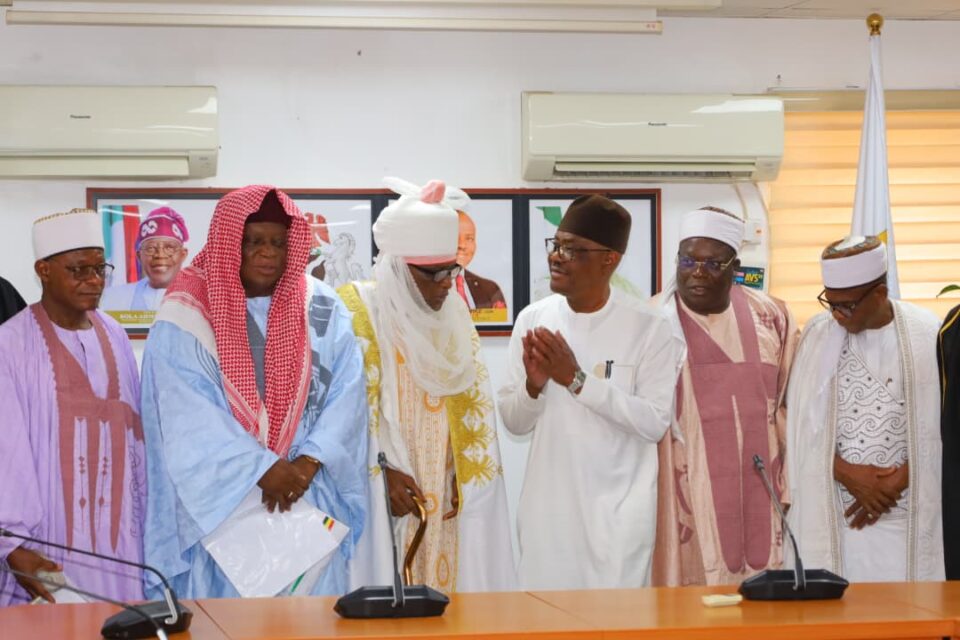
Minister of the Federal Capital Territory, Nyesom Wike, on Friday, announced the allocation of lands to members of the FCT Council of Traditional Rulers.
He also waived all statutory fees for their land titles.
The ceremony, held in Abuja on Friday, saw Wike also announcing the fee waiver, which he said was in line with directives from President Bola Ahmed Tinubu.
The FCT Minister said, “We cannot deny the fact that there are indigenous people who were here before the creation of the FCT.
“The President said we must extend a hand of fellowship to you. We must give honour to whom honour is due. If those who make peace cannot be appreciated with land, who should be?”
Wike also commended the traditional rulers for their role in ensuring what he described as the “most peaceful” Area Council elections in the territory’s history.
He said to further support the traditional rulers’ work, utility vehicles will be provided to all of them “so that you will be able to carry out your duties as expected.”
He highlighted ongoing infrastructure projects in the satellite towns, including the dualisation of the Airport-Kuje road, the Bwari-Zuba link road, developments in Apo/Karshi and Basan Jiwa, and the completion of the Arab Road network.
On the fee waiver, Wike said it would be unfair to ask traditional rulers to source for large sums of money to pay for land they have inhabited for generations.
“The President has also said I should waive the payment of statutory fees. We cannot give you the task to go and look for money to pay,” he told the traditional rulers.
Ona of Abaji, and the Chairman of the Council, Adamu Yunusa, expressed gratitude to President Tinubu and the FCT Minister, promising continued support from the traditional institutions for the government policies.
The decision comes amid ongoing interactions between the Federal Government and traditional institutions, which play key roles in local governance and community leadership. Over the years, traditional rulers in the FCT have acted as intermediaries between government authorities and residents, helping to maintain order during elections and in land administration.
