


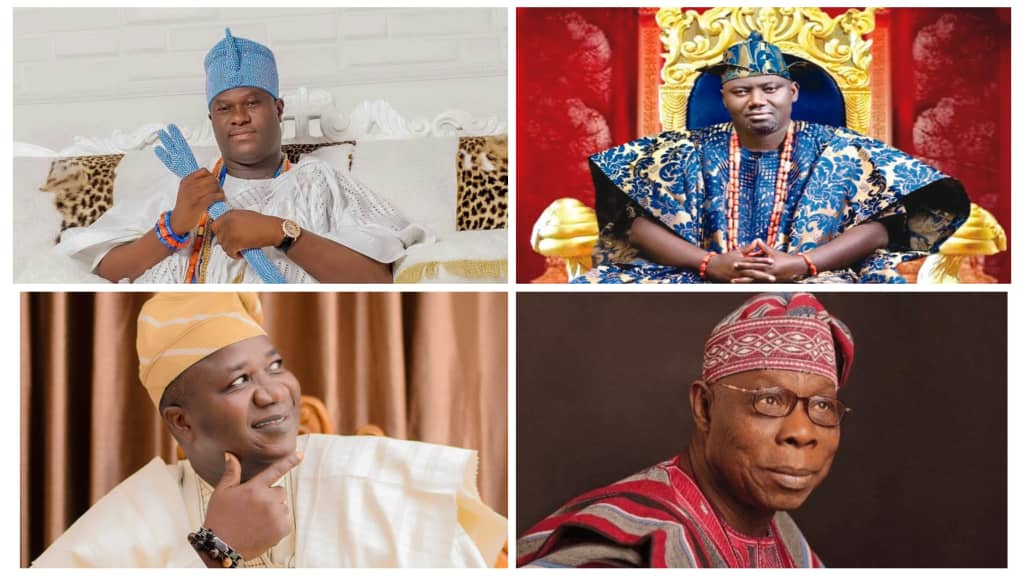
By Adéṣẹ́gun Ọṣìbánjọ
The Origins of the Yorùbá and the Two ThronesThe Yorùbá nation is one of the world’s oldest continuous civilizations, with Ilé-Ifẹ̀ as its acknowledged cradle. Oral traditions and sacred texts affirm that Odùduwà descended at Ifẹ̀ and became the progenitor of the Yorùbá race. His children and descendants fanned out across the land, founding kingdoms such as Ọ̀yọ́, Rẹ́mọ, Ìjẹ̀bú, Ìjẹ̀ṣà, Èkìtì, Ìbàdàn, and beyond.From the earliest times, Ifẹ̀ stood as the Source — the spiritual heart, the fountain from which kingship itself flowed. The Ọọni of Ifẹ̀ bore the weight of divine ancestry and crowned legitimacy. By contrast, Ọ̀yọ́ became the Sword — the imperial power that commanded cavalry, diplomacy, and political order. The Aláàfin of Ọ̀yọ́ expanded influence across West Africa, enforcing Yorùbá authority with might.Thus, Yorùbá civilisation rested on a delicate dual foundation: the Ọọni as Source of crowns and custodian of sacred tradition, and the Aláàfin as Sword of empire and defender of order. It was never rivalry. It was balance.
Seeds of Rivalry
The balance between Source and Sword was not designed for rivalry. Ifẹ̀ stood as the spiritual fountain, Ọ̀yọ́ as the political defender. Yet between the 15th and 18th centuries, Oyo’s cavalry transformed it into an empire feared across West Africa. Its reach stretched through Dahomey, Nupe, Borgu, and even across the Niger, enforcing authority through tribute, military raids, and trade dominance.In this era of imperial expansion, the Aláàfin’s visible might often eclipsed the Ọọni’s quiet but enduring primacy as the fountain of crowns.
Here lay the seed of rivalry: was true supremacy found in the Source that sanctifies, or in the Sword that compels? The tension was alive long before colonialism.The Colonial ComplicationBy the 19th century, Oyo’s empire had waned, but its pride endured. Then came colonialism, and with it, a complication that reshaped Yorùbá monarchy.The British could not grasp Yorùbá duality. Their governance demanded a “First among Equals,” a single paramount ruler to fit their bureaucracy. Balance was not enough for them; they sought hierarchy. In trying to impose a foreign order, they entangled what had been a delicate equilibrium. Thus, Complementarity was recast as Competition. The colonial question became: “Who is Supreme?”
The First Supremacy Clarification
The defining moment came on 1 April 1901, when Governor William MacGregor convened Yorùbá Ọbàs at Lagos City Hall to resolve disputes over crown legitimacy. The immediate case was between the Akarigbo of Rẹ́mọ and the Ẹlẹ́pẹ̀ of Ẹpẹ, who claimed the right to wear the Adé Ìlèkè — the sacred beaded Crown traditionally reserved for senior monarchs.At the time, Ọọni Adelekan Olubuse I (1894–1910) sat on the throne of Ilé-Ifẹ̀, while Aláàfin Lawani Agogo-Ija (1885–1905) ruled Ọ̀yọ́. During the proceedings, the Aláàfin made a remarkable concession: he acknowledged before the Colonial government that, in matters concerning crowns, the Ọọni of Ifẹ̀ was the Father and ultimate Authority.Governor MacGregor recorded this in his Dispatches on Native Administration in Yorùbáland (Colonial Office Records, CO 147/160, The National Archives, Kew, London). That moment became the First Colonial-era clarification of Supremacy, positioning the Ọọni as Custodian of Crowns and Spiritual Authority, even while Ọ̀yọ́ retained pride as the Imperial Sword.
Silent Supremacy: The 20th Century
After 1901, the Supremacy question never fully disappeared, but silence prevailed. Ọọni Adesoji Aderemi (1930–1980) stood tall as both Spiritual father and political force, becoming the first African Governor of the Western Region (1951–1959). His reign projected Ifẹ̀’s prestige far and wide.Meanwhile, successive Aláàfins navigated colonial constraints and the shadows of empire’s decline. The rivalry was muted, though never erased.
First Modern Resurgence: Aláàfin Adeyemi III Vs. Ọọni Sijuade
The calm cracked in the late 20th century. Aláàfin Lamidi Adeyemi III (1970–2022) was determined to restore Ọ̀yọ́’s lost dominance, still carrying the resentment of his father’s dethronement during Ọọni Aderemi’s ascendancy.Facing him was Ọọni Okunade Sijuade, Olubuse II (1980–2015) — charismatic, internationally connected, and intent on reasserting Ifẹ̀’s supremacy as the Source.
Their rivalry was open, fiery, and public. Adeyemi invoked Ọ̀yọ́’s imperial grandeur, while Sijuade pointed to Ifẹ̀’s sacred primacy, reinforced by MacGregor’s 1901 dispatch.This was the first modern resurgence of the supremacy challenge, and it dominated Yorùbá discourse for decades.
Second Resurgence: Ọọni Ogunwusi and Aláàfin Owoade
A fresh wave now unfolds. Ọọni Adeyeye Enitan Ogunwusi, Ọjájá II (2015– ), has projected Ifẹ̀’s global influence with youthful energy, cultural diplomacy, and media mastery. Across the divide, Aláàfin Abímbólá Owóadé I (2024– ) carries Ọ̀yọ́’s imperial banner with vigour, embodying the Sword’s historic pride.Tensions rose sharply when Ọọni Ogunwusi installed an Ìbàdàn-based businessman as “Honorary Chief of Yorùbáland,” prompting Aláàfin Owoade to demand reversal.
In today’s digital age, every gesture — handshakes, seating orders, ceremonial language — becomes a supremacy signal, amplified by social media.
Understanding the Rift
At its root, the rift persists because colonial complications turned complementarity into rivalry. In Yorùbá thought, the Ọọni as Source and the Aláàfin as Sword were never designed to compete — they were Co-Anchors of balance.Colonial hierarchies introduced “First and Second,” and postcolonial politics kept the embers alive. The Lagos Conference of 1901 gave Ifẹ̀ recognition in spiritual matters, yet Ọ̀yọ́’s imperial pride remained deeply seated. In today’s Nigeria, both thrones still hold weight, though differently. The Aláàfin’s military authority has passed into history, his cavalry disbanded and tributary states dissolved. The Sword endures more as heritage — a proud symbol of Ọ̀yọ́’s grandeur.The Ọọni’s role as Source, however, continues in living practice. Every coronation of a Yorùbá Ọba still draws from Ifẹ̀’s sacred authority. Ilé-Ifẹ̀ remains the fountain from which kingship flows.Seen this way, the Sword may be cherished as a Legacy of power, while the Source remains an enduring Authority. Acknowledging both in the rightful context may open the way to harmony.
Pathways to Harmony
The path to healing may lie in tradition, not imposed frameworks. Some possible pathways include:Mediation by Eminent Elders: Leaders such as President Bola Ahmed Tinubu, former President Olúṣẹ́gun Obásanjọ́, and the original Adé-Ìlèkè Ọbàs (Beaded Crown Monarchs) could naturally serve as mediators and custodians of harmony.
Re-emphasising Complementary Roles: The Ọọni as the Source — Guardian of Crowns and Spiritual Father; the Aláàfin as the Sword — symbol of the Legacy of Imperial strength and political order. It is pertinent to caution that this legacy is not confused as the endorsement of the Injustices associated with Imperialism.
Recent Developments: On July 30, 2024, Ọọni Ogunwusi was inaugurated as Chairman of the Southern Nigeria Traditional Rulers Council. This recognition preceding Aláàfin Owoade’s ascension, has already tilted symbolic seniority toward Ifẹ̀. Reviving a Yorùbá Ọbàs’ Collective Council could offer a balanced platform where both Source and Sword are jointly honoured.
Refining Language: Both thrones are today addressed as “Imperial Majesty.” Some may consider distinguishing them: the Source as His Sacred Majesty, and the Sword as His Imperial Majesty. Such refinements could elevate both without diminishing either.
Preserving Dignity: To call ‘Yorùbá Thrones’ “Stools” is cultural vandalism. These are not wooden seats, but Altars of civilisation. Equally, reducing Ọbàs to “Chiefs” is distortion. Ọbàs are Institutional and Cultural Monarchs, just as the British sovereign is — Chiefs are their appointees, not their equals.
Above all, colonial records like MacGregor’s 1901 Dispatch should serve as history, not as cultural authority. Yorùbás must define their own order, guided by ancestral wisdom.
Twin Guardians of Civilization
The supremacy challenge between the Ọọni and the Aláàfin is as old as Yorùbá civilisation. It began not as rivalry but as balance — Source and Sword. Colonialism distorted it, politics reignited it. The 1901 Lagos Conference clarified Ifẹ̀’s primacy in crowns, but Ọ̀yọ́ never yielded its imperial pride.The way forward may lie in Yorùbá-grounded solutions: restoring Source and Sword as complementary, reviving the Councils of Ọbàs, empowering Elders as mediators, and preserving dignity in the language of Kingship.
This reflection is offered as a ‘Call for Peace and Balance’ — inviting eminent elders such as President Tinubu, President Obásanjọ́, and the Adé-Ìlèkè Ọbàs to guide reconciliation. Their standing uniquely positions them to reaffirm the Ọọni and Aláàfin as Twin Guardians of Yorùbá civilisation.Together, the Source and the Sword may once again stand as unshaken pillars of unity, identity, and pride for the Yorùbá nation.God bless Nigeria!!!
© Engr. Adéṣẹ́gun Olútáyọ̀ Adéolú Ọṣìbánjọ BENG, MBA, MNSE, MNIEE, MCIPSMNLead Consultant, MaakBeat Transnational Ltd | Convener, Africa Woke Citizens Platform (AWCP)🎥 TV Guest Appearances & Video Links📚 Published Works🔗 LinkedIn Profile
Key Sources
MacGregor, William. Dispatches on Native Administration in Yorùbáland (Colonial Office Records, CO 147/160, The National Archives, Kew, 1901).Johnson, Samuel. The History of the Yorùbás (Lagos: CMS, 1921).Akintoye, S. A. A History of the Yorùbá People (Saloon Publishing, 2010).Falola, Toyin. Yorùbá Gurus: Indigenous Production of Knowledge in Africa (Africa World Press, 1999).
