


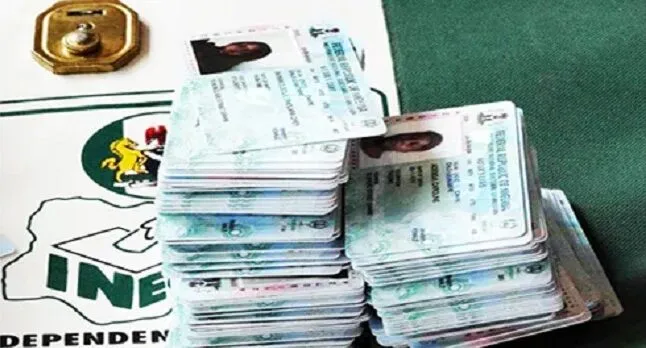
In the buildup to the 2027 general elections, the Independent National Electoral Commission (INEC) has registered a total of 6,885,330 new prospective voters across the three phases of the Continuous Voter Registration (CVR) exercise, which ends on Sunday, July 26, 2026. This is after the exercise was extended by two weeks from the initial closing day of July 10.
According to INEC in a statement by its chairman, Information and Voter Education Committee, Mohammed Kudu Haruna, the third phase is supposed to be the final part of the exercise. The second phase was suspended on April 17, 2026 to allow the commission clean up its register after publication for claims and objections by registrants.

Barring any alteration, the commission will in August display the register of voters for claims and objections.
However, with the conclusion of the third phase, there is an indication that the exercise fell short of capturing the anticipated number.
In Niger, bandits give farmers condition
Mary Habila: What went wrong?
An official of the Independent National Electoral Commission who spoke on condition of anonymity said the commission had projected that the exercise could add 10 million new voters to the national register. This would have brought the total number of registered voters in Nigeria to 103 million as INEC records shows a total of 84,004,084 registered voters ahead of the 2019 general elections, with the figure rising to 93,469,008 for the 2023 polls, representing an increase of 9,464,924 voters.
The INEC official who spoke with our correspondent said the commission would not announce the final number of newly registered voters until after the registration portal closes and all verification processes are completed.
He explained that although reports indicate that more than six million new voters may have registered so far, the figure remains provisional because INEC still has to conduct biometric de-duplication and publish the register for claims and objections.
“We anticipated this from the beginning of the exercise. Our projection was that we could have another 10 million new voters. Whether we eventually meet that projection or not, we cannot say anything definite until the registration closes and all the back-end processes are concluded,” the official said.
He added that the commission would clean up the register by removing multiple registrations through biometric verification before displaying the provisional register to allow Nigerians correct errors or object to ineligible entries, including deceased persons.
According to him, only after completing the verification and claims process will INEC release the official figure of newly registered voters and update the national voters’ register.
Weekend Trust recalls that the Continuous Voters Registration has not been without controversies since it started.
Apart from suspension in some states due to off-cycle elections, there have been cases where the commission had to extend the deadline due to hitches in the process.
The most controversial has been the plan by INEC to embark on what it called
Voters’ revalidation exercise across Nigeria
The plan was greeted by an avalanche of backlash that the commission had to instruct its resident electoral commissioners (RECs) to halt all publicity and logistics arrangements for the planned nationwide exercise.
INEC had explained that revalidating the voter register was aimed at removing the names of those who had passed away, ensuring that the register is more accurate and manageable rather than being filled with outdated entries.
The commission also explained that the exercise was for cleaning up and updating the voter register by allowing eligible Nigerians to confirm or update their details, while addressing issues such as duplicate registrations and outdated voter information
Despite the suspension of physical activities, INEC clarified that preparatory work behind the scenes on the revalidation of voters would continue.
With that, resident electoral commissioners were instructed to organise internal preparations, which included hiring and assigning staff and ensuring that the commission’s technology like INEC Voter Enrolment Devices was fully operational.
Speaking with our correspondent, the chairman, Information and Voter Education Committee confirmed that INEC extended the exercise by two weeks. He, however, declined further comment on the matter.
How people complied with the current exercise
An analysis of the commission’s data by Weekend Trust shows that 3,631,488 prospective voters completed online pre-registration while 3,253,842 were physically captured during the three phases of the exercise.
The figures showed that phase I of the exercise, conducted between August and December 2025, recorded 2,685,725 registrations, comprising 1,576,137 online pre-registrations and 1,109,588 physical registrations.
Phase II, week six, released on February 13, 2026, recorded 1,228,648 registrations, made up of 673,124 online pre-registrations and 555,524 physical registrations.
The latest phase III, week 10 report, released on July 17, 2026, showed that registrations had risen to 2,970,957, with 1,382,227 completed online pre-registrations and 1,588,730 physical registrations.
A state-by-state analysis by Weekend Trust showed that Kano recorded the highest cumulative registrations across the three reporting periods with 465,964 registrants, followed by Lagos with 350,337 and Sokoto with 338,730.
Imo recorded 251,309 registrations, while Osun posted 238,240 before registration was suspended during phase III because of governorship election. Borno recorded 201,724 registrations.
Among states whose data were available only in phases II and III, Jigawa recorded 194,494 registrations, followed by Delta with 171,859; Edo, 150,829; Taraba, 138,897; Abia, 135,838; Katsina, 135,626; Kaduna, 134,172; Ebonyi, 133,618; Ogun, 129,734; Bauchi, 128,544; Benue, 125,639; Oyo, 121,261, and Niger 115,24.
Others are Nasaraw,a 113,904; Zamfara, 113,608; Kebbi, 113,154; Cross River, 107,670; Gombe, 97,081; Bayelsa, 96,677; Anambra, 94,370; Adamawa, 93,233; Akwa Ibom, 80,761 and Borno, 77,889; excluding the phase I figure: Kogi, 104,641; Kwara, 99,350; Rivers, 98,690; Yobe, 102,775; Plateau, 46,768; Enugu, 58,146; Ondo, 29,925, the Federal Capital Territory, 41,700, and Ekiti, 11,495.
The phase III, week 10 report showed that women accounted for 1,561,765 or 52.57 per cent of the latest registrations, while men accounted for 1,409,192 or 47.43 per cent.
The report also indicated that young people between the ages of 18 and 34 remained the dominant group with 2,003,183 registrants, followed by those aged between 35 and 49 years, with 645,651, those between 50 and 69 years with 294,443 and those aged 70 years and above with 27,680.
Students constituted the largest occupational group in the three phases with 1,833,160 registrants, followed by business owners with 1,366,159, housewives with 1,181,206, farmers and fishers with 998,074, artisans with 214,308, traders with 190,785, civil servants with 166,057, and public servants with 127,862 registrants.
The commission also recorded 32,361 persons with disabilities in the latest phase of the exercise.
According to the commission, registration was suspended in the Federal Capital Territory during phase II because of area council election and later suspended in Osun State during phase III in line with the provisions of the electoral act ahead of the state’s governorship election.
North-West leads regional registration
An analysis of voter registration data compiled by Weekend Trust from the three phases of the Independent National Electoral Commission’s Continuous Voter Registration exercise has shown that the North-West recorded the highest number of registrations among the six geopolitical zones.
The analysis, based on figures released by the electoral commission for phase I, phase II, week six, and phase III, week 10, showed that the North-West accounted for 1,560,531 registrations, driven largely by Kano, Sokoto and Jigawa, which emerged among the highest-performing states in the exercise.
From the available data, the South-East followed with 830,774 registrations, while the North-Central recorded 784,632 registrations. The South-South posted 772,503 registrations, narrowly ahead of the South-West, which recorded 758,170, while the North-East had the lowest tally of 753,431 registrations.
A further breakdown showed that Kano remained the biggest contributor to the North-West’s total with 465,964 registrations across the three reporting periods, followed by Sokoto with 338,730, Jigawa with 194,494, Katsina with 135,626, Kaduna with 134,172, Kebbi with 113,154 and Zamfara with 113,608.
In the South-East, Imo led the zone with 251,309 registrations, followed by Abia with 135,838, Ebonyi with 133,618, Anambra with 94,370 and Enugu with 58,146.
Benue topped the North-Central with 125,639 registrations, ahead of Niger with 115,244, Nasarawa with 113,904, Kogi with 104,641, Kwara with 99,350, Plateau with 46,768 and the Federal Capital Territory with 41,700.
Delta recorded the highest registrations in the South-South with 171,859, followed by Edo with 150,829, Cross River with 107,670, Rivers with 98,690, Bayelsa with 96,677 and Akwa Ibom with 80,761.
In the North-East, Borno led with 201,724 registrations, followed by Taraba with 138,897, Bauchi with 128,544, Yobe with 102,775, Gombe with 97,081 and Adamawa with 93,233.
Lagos emerged as the leading state in the South-West with 350,337 registrations, followed by Osun with 238,240, Ogun with 129,734, Oyo with 121,261, Ondo with 29,925 and Ekiti with 11,495.
‘New figure only relevant if translated into election turnout’
The increase in the number of newly registered voters ahead of the 2027 general elections will only strengthen Nigeria’s democracy if those on the register eventually turn out to vote, a political scientist, Kamilu Sani Fage, has said.
Speaking with Weekend Trust, Fage said the essence of the Continuous Voter Registration exercise was to accommodate Nigerians who had attained the voting age of 18 since the last general elections, as well as eligible citizens who were unable to register previously.
He said the addition of over six million new registrants suggested that the country’s voter register would expand significantly, pushing the total number of registered voters close to the 100million mark.
The political analyst, however, cautioned that the figures would only be meaningful if the Independent National Electoral Commission thoroughly cleaned the register before the election to eliminate cases of multiple registrations.
“There could be duplications. We hope INEC would take measures to clean the register and ensure that those with double registration are removed so that we have a realistic number of voters,” he said.
Fage also expressed concern over Nigeria’s consistently low voter turnout, noting that despite the growing number of registered voters, participation on election day remained poor, with turnout hovering below 30 per cent in recent elections.
He urged INEC and political parties to intensify voter education and public enlightenment campaigns to encourage registered voters to collect their permanent voter cards and participate actively in the electoral process.
According to him, increasing the size of the voter register would have little impact on the country’s democracy unless it is matched by higher voter turnout on election day.
Voters express willingness to participate in 2027
An online opinion poll conducted by our correspondents has shown that despite lingering concerns over the credibility of elections, majority of respondents expressed readiness to participate in the 2027 general elections.
The survey, created through Google Forms and shared online for 24 hours, attracted 28 responses. Of the respondents, 20 said they were willing to vote in the 2027 elections, while four said they would not. The remaining respondents expressed uncertainty and gave responses that did not clearly indicate whether they would vote.
Many of those willing to vote said they regarded voting as a civic responsibility and an opportunity to bring about change in the country’s leadership.
“I still believe my vote counts for a better Nigeria,” one respondent noted.
Another respondent wrote: “I want to contribute my quota in ensuring good leaders get into power.”
A third respondent stated, “I believe we need a visionary leader to help move this country forward,” while another person simply stated: “I want to make the change.”
Others linked their decision to vote to the desire for national progress.
“I am ready to vote to bring changes in our country,” one participant said, while another noted that he would vote “because I need a change.”
However, respondents who said they were unwilling to vote cited lack of confidence in the electoral process, arguing that election outcomes often did not reflect the wishes of voters.
One respondent said, “Nowadays the real citizens’ voting is not being counted,” while another described voting as “totally a waste of time.”
Another respondent who was undecided said, “I am not sure of voting because our votes don’t count in Nigeria.”
The survey also showed that 20 of the 28 respondents already possessed permanent voter cards (PVCs), while eight said they did not. Among those without PVCs, reasons given included demanding work schedules, ongoing registration or renewal processes, and the belief that their votes would not count.
The findings suggest that while many eligible voters remain enthusiastic about participating in the 2027 polls, concerns over electoral transparency and whether votes would count continue to influence public confidence in the electoral process.
Difference with previous elections
Data contained in INEC’s 2023 General Election Report showed that all the 36 states and the Federal Capital Territory recorded increases in the number of registered voters between the two election cycles.
Lagos retained its position as the state with the highest number of registered voters, increasing from 6,570,291 in 2019 to 7,060,195 in 2023. Kano followed with 5,457,747 voters in 2019, rising to 5,921,370 in 2023, while Kaduna’s register grew from 3,932,492 to 4,335,208.
Rivers recorded an increase from 3,215,273 to 3,537,190, Katsina from 3,230,230 to 3,516,719, and Oyo from 2,934,107 to 3,276,675.
Other states also recorded increases, with Delta rising from 2,845,274 to 3,221,697; Plateau from 2,480,455 to 2,789,528; Benue from 2,480,131 to 2,777,727; Bauchi from 2,462,843 to 2,749,268; Niger from 2,390,035 to 2,698,344; and Ogun from 2,375,003 to 2,688,305.
Anambra’s voter register increased from 2,447,996 to 2,656,437, Borno from 2,315,956 to 2,513,281, Edo from 2,210,534 to 2,501,081, Imo from 2,272,293 to 2,419,922, Akwa Ibom from 2,119,727 to 2,357,418, and Jigawa from 2,111,106 to 2,351,298.
Adamawa recorded 1,973,083 voters in 2019 and 2,196,566 in 2023; Sokoto rose from 1,903,166 to 2,172,056; Abia from 1,932,892 to 2,120,808; Enugu from 1,944,016 to 2,112,793; Kebbi from 1,806,231 to 2,032,041; and Taraba from 1,777,105 to 2,022,374.
Ondo recorded an increase from 1,822,346 to 1,991,344; Osun from 1,680,498 to 1,954,800; Kogi from 1,646,350 to 1,932,654; Zamfara from 1,717,128 to 1,926,870; Nasarawa from 1,617,786 to 1,899,244; Cross River from 1,527,289 to 1,766,466; Kwara from 1,406,457 to 1,695,927; Ebonyi from 1,459,933 to 1,597,646; Gombe from 1,394,393 to 1,575,794; the FCT from 1,344,856 to 1,570,307; Yobe from 1,365,913 to 1,485,146; Bayelsa from 923,182 to 1,056,862; while Ekiti recorded the lowest, increasing from 909,967 in 2019 to 987,647 in 2023.
(Daily Trust)
