


… declares his emergence as LP’s presidential flagbearer as fundamentally flawed
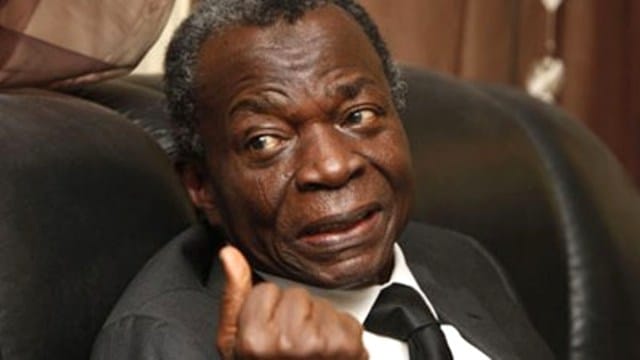
A former President of the Court of Appeal, Justice Ayo Salami, says Peter Obi should not have been allowed to contest the 2023 presidential election on the Labour Party’s platform.
The retired jurist anchored his position on “clear constitutional limitations”, arguing that the process leading to Obi’s emergence as the presidential candidate of the LP was fundamentally flawed.
Salami made this declaration in Ilorin, the Kwara State capital, when he received an award from the Wole Soyinka Centre for Investigative Journalism, presented by Founder and Executive Director of the centre, Dapo Olorunyomi and Motunrayo Alaka.
Criticising judiciary, Salami linked controversial political outcomes to gaps in competence among some judges, saying such shortcomings have contributed to questionable rulings across different levels of the courts.
“For instance, Peter Obi ought not be allowed to contest the 2023 presidential elections. By the time he (Obi) exited the Peoples Democratic Party primary, the Labour Party had already submitted its membership list to the Independent National Electoral Commission”, he said.
Salami argued that the Nigerian Constitution does not recognise independent candidacy, questioning how Obi secured the Labour Party ticket without prior membership.
The retired jurist extended his criticism to broader judicial decisions, citing inconsistencies even at the apex court.
Making reference to the case of Kano State Governor Abba Kabir Yusuf, he noted that discrepancies around party membership documentation were overlooked despite earlier objections at the lower courts.
“The register is supposed to be the mother of the membership card,” Salami said, lamenting that such fundamental issues were disregarded.
Justice Salami attributed these outcomes not necessarily to corruption, but to “intellectual and experiential deficiencies within sections of the bench”.
“Some of them have problems learning. They do not have the background to be judges,” he said.
He expressed regret that there is a decline in the rigour of judicial appointments.
Salami said the expansion of legal education and the proliferation of law faculties have contributed to a system where standards are increasingly strained.
“At times, if you see the judgments, even at the Supreme Court, you will be astounded,” he added.
Salami further criticised the elevation process within the judiciary, arguing that vacancies and zoning considerations often override merit, leading to the promotion of less experienced judges over more qualified seniors.
He cited his personal experience, revealing that some of his juniors at the Court of Appeal were elevated to the Supreme Court ahead of him due to the absence of vacancies in his geopolitical zone.
“That is the tragedy we have found ourselves in,” he said, expressing hope that reforms would eventually restore integrity to the system.
Justice Salami expressed appreciation for the honour, noting that recognition of judicial service serves as encouragement not only for recipients but for the broader legal community.
He also reflected on influences that shaped his career path, citing Nobel laureate Wole Soyinka for his principled stance on national issues, and late nationalist leader Obafemi Awolowo as a major inspiration behind his decision to study law.
Justice Salami recalled how Awolowo’s self defence during his treason trial left a lasting impression on him, reinforcing his resolve to pursue a legal career.
