


Two prominent civil society groups have warned that the hasty creation of state police forces could entrench a new era of human rights abuses and political manipulation, insisting that “drafting is not democracy.”
In a joint press statement, the Gani Fawehinmi Memorial Organisation (GAFAMORG) and the National Coalition Against Mass Killings, Extra-Judicial Killings, Mob Actions and Impunity (NCAMKI) demanded the immediate publication of the proposed National Policing Bill, 2026, alongside 29 consequential amendment bills.

*The Push for Transparency*
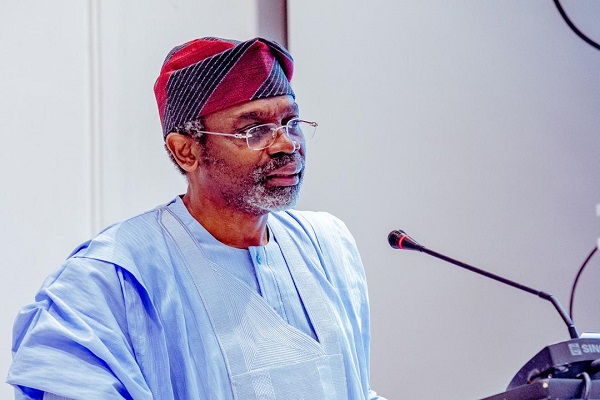
The groups’ intervention follows an announcement by the Chief of Staff to the President and Chairman of the Presidential Working Group on the National Policing Bill, Femi Gbajabiamila.
Gbajabiamila had revealed that the drafted bills were submitted to the Federal Ministry of Justice on 19 October 2026, with validated drafts expected back by 30 October 2026 for the President’s final consideration.
While acknowledging the development as a significant milestone in the decentralised policing debate, GAFAMORG and NCAMKI argued that executive drafting cannot substitute for robust public scrutiny.
“Transferring coercive powers to state institutions without adequate accountability will expose citizens to new forms of abuse and deepen the culture of impunity,” the statement, jointly signed by Comrade Agunbiade Tunde, Comrade Ade Adeoye Adewumi and Barrister Prince Jimoh Ekpoi, warned.
*Demanding 42 Institutional Safeguards*
To prevent regional law enforcement from becoming political tools for state governors, GAFAMORG has introduced a framework featuring 42 explicit safeguards for state policing and justice delivery.
Endorsed by NCAMKI, the framework outlines critical protections across institutional, operational and legal lines.
The coalitions are demanding that the Ministry of Justice integrate these 42 safeguards during its ongoing review.
They raised several vital operational questions that the current draft must answer, including:
• Who protects state police officers from unlawful political orders?
• What independent body will investigate complaints and mass killings involving senior commanders?
• How will police budgets be audited to prevent financial control from being used as political retaliation?
• What explicit limits will govern surveillance technologies and protect lawful protests, journalism, and political opposition?
*A Call to Action for State Assemblies and Civil Society*
The groups also cautioned State Houses of Assembly against treating the constitutional amendment process as a mere rubber-stamping exercise.
They reminded state lawmakers that the National Assembly’s 30-day timeline was an administrative target, not a replacement for strict constitutional requirements.
“No timetable should sacrifice meaningful scrutiny of a reform with far-reaching consequences for lives and liberty,” the coalitions stated, urging states that have not yet voted to hold extensive public hearings.
Finishing with an appeal to organised labour—including the Nigeria Labour Congress (NLC) and the Trade Union Congress (TUC)—the Nigerian Bar Association (NBA), and academia, the groups urged stakeholders to unite and demand public hearings.
The statement concluded with a firm reminder that effective policing must co-exist with democratic accountability.
“Let us not wait for abuses to occur before discovering safeguards were never secured,” it stated.
