


By Ayo Arowojolu
As the 2027 political contest gathers momentum, three prominent speakers at the 46th edition of Boiling Point Arena have challenged Nigerians to look beyond the familiar practice of blaming politicians for the country’s worsening fortunes, arguing that citizens themselves must accept responsibility for sustaining a political system that repeatedly produces poor governance.

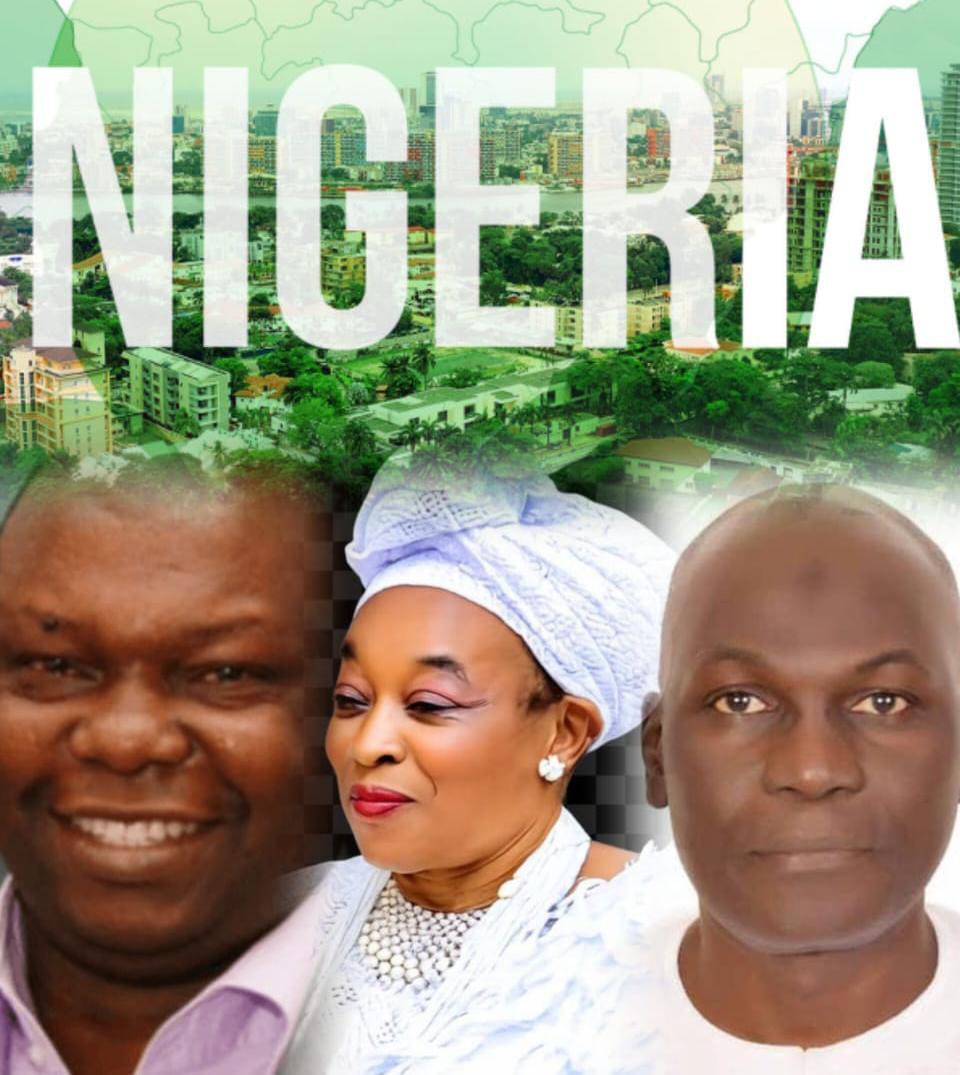
Former Mayor of the London Borough of Wandsworth, Erelu Tunwase Lola Ayonrinde, Public Affairs Analyst, Dr. Festus Adedayo; and Political Sociologist, Prof. Muhammad Kuna; said Nigeria’s democratic crisis could not be resolved merely by replacing one set of politicians with another without confronting the deeper structures and behaviours that keep reproducing the same outcomes.
The trio spoke on the theme, “2027 and Beyond: Is This Nigeria’s Final Window for National Redemption?”
The Zoom discourse, hosted by a Communication Strategy Expert, Dr Ayo Arowojolu, was also broadcast live on multiple partner radio stations across Lagos, Ogun and Delta States.
Ayonrinde delivered perhaps the most direct challenge to the electorate, arguing that Nigerians have not sufficiently understood the power they possess as voters.
She said political leaders ultimately emerge from the people, adding that citizens who elect them must be prepared to demand accountability rather than constantly finding excuses for their failures.
“Your followership is your problem,” she told the audience.
According to her, citizens have the power to determine who governs them but often surrender that power by defending politicians on ethnic, partisan or other considerations even when their performance contradicts the interests of the wider society.
She said no political system could work effectively for citizens who refused to hold their leaders accountable.
Her argument was that the 2027 conversation should therefore not be restricted to political parties, candidates and their promises, but should also interrogate the behaviour of the electorate.
She said Nigerians should ask whether the leaders they elect are delivering the security, education, healthcare, employment and other basic services expected from government.
Ayonrinde also challenged the tendency to judge political leaders through tribal or partisan loyalty rather than measurable performance.
But, she argued, the critical question should not be whether a politician belongs to one’s preferred political camp. Rather, citizens should ask whether the government has delivered on its promises.
She therefore urged Nigerians to shift the conversation from who would succeed the incumbent to whether the incumbent had actually delivered on his promises.
“The conversation should be, has this President delivered?” she asked.
For Ayonrinde, the answer should be based on evidence and citizens’ lived experiences rather than partisan propaganda.
Her intervention dovetailed with Prof. Kuna’s argument that Nigeria’s democratic crisis was fundamentally a crisis of the social contract between citizens and the state.
Kuna said Nigerians should stop approaching elections primarily as contests over personalities and instead use them to demand measurable improvements in their quality of life.
He urged citizens to ask political leaders what they had done about electricity, education, healthcare, water, security and employment.
“What did you do for us in the past three years?” he asked, arguing that such questions should form the basis of citizens’ assessment of governments.
According to Kuna, the growing disconnect between citizens and government had weakened confidence in the Nigerian state.
He said citizens were increasingly providing privately what government should ordinarily provide, including water, healthcare and education, because public institutions had failed to meet their basic needs. He described the situation as a breakdown of the social contract.
For him, the meaning of “redemption” in the 2027 conversation should therefore be the rebuilding of that relationship between citizens and the state.
“In political sociology, we don’t see redemption as a religious or idealistic issue. We look at redemption as the reinforcement of the social contracts between citizens and the state,” he said.
He said a country where young people lack employment, education, security and hope could face growing frustration and instability.
The responsibility, he argued, therefore belongs to both government and citizens: leaders must provide accountable governance while citizens must demand it.
Dr Festus Adedayo approached the issue from the electoral and institutional side, arguing that the failure of Nigerian democracy could not be blamed solely on individual politicians because the country’s electoral architecture itself remains defective.
He said Nigerians have repeatedly participated in elections characterised by vote buying, electoral manipulation, violence and questions over the independence of electoral institutions.
According to him, these practices have persisted since the early years of Nigeria’s electoral history, although the techniques have become more sophisticated.
He argued that citizens’ willingness to sell their votes was partly driven by economic hardship but warned that the practice ultimately reinforced the same political system that had failed to improve their conditions.
Adedayo also criticised what he described as voter cynicism, particularly among young people who increasingly believe that their votes do not translate into meaningful governance.
But rather than allowing that cynicism to become permanent political withdrawal, he argued that Nigeria needed citizens who would insist on credible elections and hold political institutions accountable.
He warned that the 2027 election could be worse than 2023 if the country failed to correct the underlying electoral problems.
“2027 election will be worse than the 2023 election. You don’t need a soothsayer to tell you,” he said.
Adedayo said the solution required fundamental reforms to the electoral “substructure”, including the process for appointing the leadership of the electoral commission and the manner in which the commission is funded.
He advocated a system in which the electoral commission would have greater institutional independence and financial autonomy.
The three speakers also converged on the danger of allowing political identity to overwhelm citizens’ judgement of governance.
Adedayo, meanwhile, warned that the weakening of opposition parties and the movement of politicians into the ruling party could create conditions for a de facto one-party system, reducing the competitive pressure required for democratic accountability.
The result, according to the speakers, is a cycle in which political leaders can fail to deliver, citizens complain about their hardship, but the same citizens eventually return to the electoral arena and reproduce the political arrangements responsible for the hardship.
That cycle, they suggested, is one of the central questions Nigeria must confront before 2027.
The implication is that the Nigerian electorate cannot permanently separate itself from the consequences of its political choices.
As the 2027 election approaches, the three speakers consequently challenged Nigerians to move from passive spectatorship to active citizenship—scrutinising candidates, interrogating their records, demanding accountability and refusing to allow ethnicity, party loyalty or short-term inducements to determine their political choices.
For them, the real test of 2027 may therefore not simply be whether Nigerians successfully elect another government.
It may be whether Nigerian citizens finally recognise the power they possess to change the behaviour of those who govern them—and whether they are prepared to use that power.
