


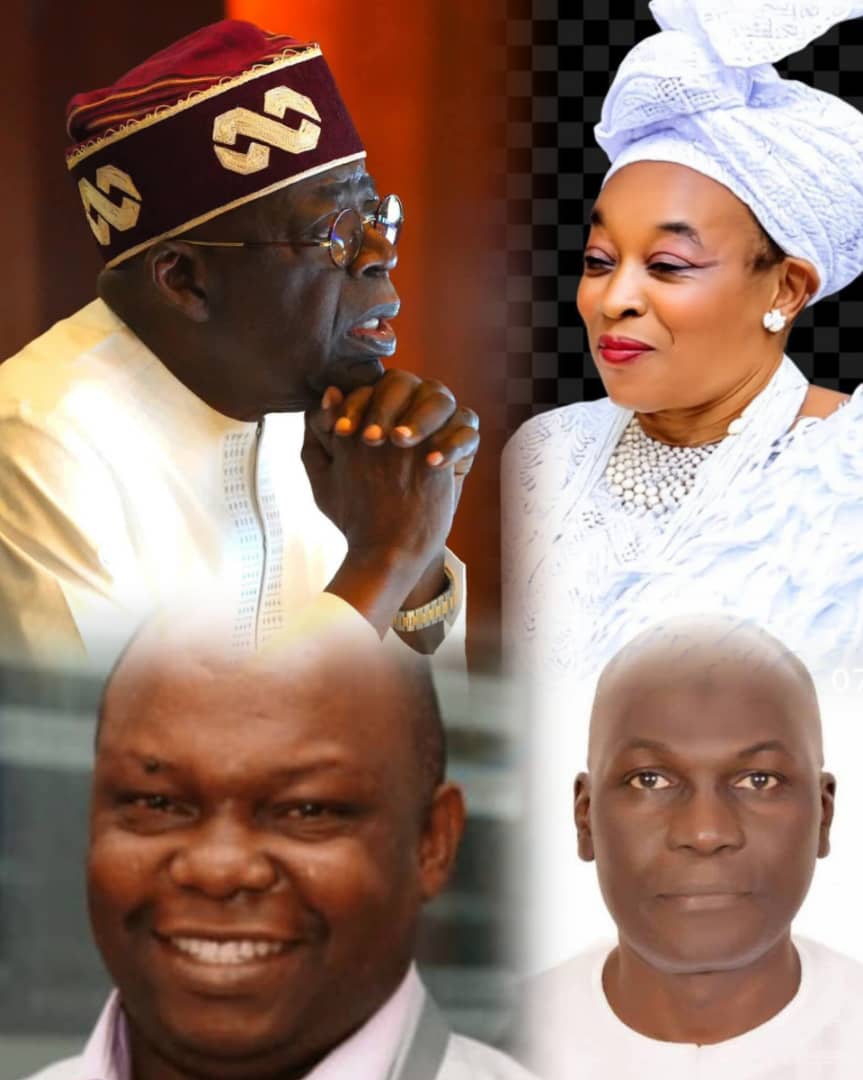
Three prominent voices at the 46th edition of Boiling Point Arena have warned that the real danger for post-2027 Nigeria is bigger than who wins the election; Nigerians should worry more about a political system that keeps reproducing insecurity, poverty, hardship, distrust and failed governance already pushing the country towards a dangerous point of no return.
Former Mayor of the London Borough of Wandsworth, Erelu Tunwase Lola Ayonrinde, renowned Columnist, Dr. Festus Adedayo; and Political Scientist, Prof. Muhammad Kuna on Sunday night delivered a blistering assessment of Nigeria’s political condition, with a common message that the country cannot continue doing politics the same way and expect a different outcome.

Their interventions came against the backdrop of the theme of the 46th edition of the monthly discourse, “2027 and Beyond: Is This Nigeria’s Final Window for National Redemption?”
For Erelu Ayonrinde, the most immediate indictment of the Nigerian state is painfully basic: citizens cannot be guaranteed safety in their own country.
She challenged the government to explain why Nigerians are still being abducted from their homes, workplaces and roads, held captive for weeks and released traumatised, often without any meaningful response or compensation from the State.
“What are the governments of this country doing?” she asked, questioning what the Nigerian state had so far struggled to provide in terms of sufficient security for its citizens.
She reminded the audience that protection of citizens is a constitutional responsibility of government, arguing that security should be regarded as the first dividend of democracy.
Ayonrinde contrasted Nigeria’s insecurity with her experience in Britain, where, she said, citizens could have confidence that the police would respond when called.
“In this country, if they steal my mobile phone, I’ll pay N40,000 for some police officers to say they’ll be tracking down,” she said, lamenting that citizens often have little confidence that such efforts would produce results.
Her questions went to the heart of what she regarded as the failure of the Nigerian democratic project.
“Can I sleep safely in this country? Can I go to school? Can I farm my land? Can I travel without fear?” she asked.
For her, these were not abstract constitutional or political questions but basic human needs and rights. She warned that unless security became a central issue in the 2027 political conversation, the country risked wasting another electoral cycle without addressing the conditions that make citizens vulnerable.
“If banditry is not going to take a centre stage in 2027, I think this country is wasting its time,” she declared.
The former London Mayor also lamented the growing desperation among Nigerians, particularly young people, to leave the country in search of a more secure and dignified life.
She said Nigerians were increasingly looking towards Britain, the United States, Canada and South Africa, asking whether a country whose young citizens were so eager to escape could continue to describe itself as a functional democratic nation.
She questioned whether Nigeria was still sufficiently “fit for purpose” as a governing system, insisting that democracy should ultimately be judged by its ability to meet the basic needs of its people.
“You need to go to the basic needs of people, not technicalities,” she said, arguing that meeting citizens’ basic needs was what would make democracy “fit for its purpose.”
Ayonrinde also turned the searchlight on Nigerians themselves, arguing that citizens had not sufficiently understood the power they possess as the electorate. She said political leaders ultimately emerge from the people and are placed in office through their votes, meaning citizens should hold them accountable for their performance rather than constantly looking for excuses for political failure.
“Your followership is your problem,” she told the audience, insisting that no political system could work effectively if citizens continued to allow politicians to operate without sufficient accountability.
She urged Nigerians to ask what kind of political system would make Nigeria easier to govern and, more importantly, harder to misgovern.
That question resonated with Dr Festus Adedayo’s warning that Nigeria’s electoral crisis was not simply about individual politicians but about a defective electoral substructure that had remained largely unreformed for decades.
Adedayo delivered perhaps the starkest electoral warning of the evening, declaring that he was pessimistic about the prospects of the 2027 election.
“2027 election will be worse than the 2023 election. You don’t need a soothsayer to tell you,” he said.
He argued that the enormous financial resources now available to political actors, combined with increasingly sophisticated methods of manipulating elections, could make the 2027 contest even more problematic than 2023.
According to him, Nigeria has never fully resolved the questions surrounding the credibility and independence of its electoral umpire.
He questioned the wisdom of allowing the Presidency to determine the leadership of the electoral commission, arguing that the arrangement could undermine public confidence in the institution.
“Who do you think the chairman of INEC is going to favour other than the man who calls the piper?” he asked.
Adedayo called for a fundamental restructuring of the process for appointing the electoral umpire and advocated independent funding for the commission through a first-line charge arrangement.
He warned that without such reforms, Nigerians could enter 2027 with the same distrust that followed the 2023 elections, only under even more difficult economic and political circumstances.
He also identified vote buying, voter apathy, insecurity, electoral violence, political defections and the weakening of opposition parties as threats capable of damaging the legitimacy of the 2027 outcome.
He warned particularly against what he described as the danger of a de facto one-party state, saying the movement of politicians into the ruling party and divisions within opposition parties could diminish genuine political competition.
But if Adedayo’s concern was the credibility of the election, Prof. Muhammad Kuna took the argument to the larger question of the survival of the Nigerian state and the social contract between government and citizens.
“The question is not who wins an election. Actually, the question is about the very survival of this country as a nation, the survival of its people and the survival of Nigeria generally,” Kuna said.
He argued that Nigeria was experiencing a convergence of economic hardship, insecurity and a deepening crisis of confidence in government.
For him, the country’s problem could not be solved merely by changing the occupant of political office if the underlying relationship between the state and citizens remained broken.
Kuna described Nigeria’s youthful population as both a demographic opportunity and a potential time bomb.
With the country’s population projected to continue growing rapidly and a large proportion of Nigerians below the age of 30, he said government must urgently create productive opportunities for young people while fixing power, education, healthcare and security. Otherwise, he warned, Nigeria’s demographic advantage could become a serious liability.
Kuna also challenged Nigerians to redefine what they should demand from politicians ahead of 2027. Rather than allowing elections to revolve around personalities, ethnic calculations and political propaganda, he urged citizens to ask candidates and incumbent governments simple but fundamental questions: “What have you done about electricity? What have you done about schools and hospitals? What have you done about access to healthcare and basic services?”
For him, “redemption” should be understood in political rather than merely religious terms. “In political sociology, we don’t see redemption as a religious or idealistic issue. We look at redemption as the reinforcement of the social contracts between citizens and the state,” he said.
Taken together, the trio of Erelu Tunwase, Dr Festus Adedayo and Prof Muhammad Kuna gave a broad indictment of a system in which citizens struggle to feel safe, young people struggle to find opportunities, voters struggle to trust elections and government struggles to convince Nigerians that democracy is delivering meaningful dividends.
The deeper question, they suggested, is whether Nigeria can break the cycle in which the same political architecture produces new occupants but the same old problems.
The discourse, chaired by a frontine traditional ruler, the Olowu of Owu Kingdom, Oba Prof Saka Matemilola, was hosted by a veteran journalist, Dr Ayo Arowojolu, and broadcast live on multiple partner radio stations in Lagos, Ogun and Delta States.
